
Staggered Wheel Setup Explained: Why Your Rear Wheels Should Be Wider
TL;DR
A staggered wheel setup uses wider wheels and tyres on the rear axle than the front, improving rear grip, cornering stability, and giving your car a more aggressive stance. It is the go-to configuration for rear-wheel-drive sports cars and performance sedans — but it does come with trade-offs like no tyre rotation and slightly higher running costs.
In This Guide
What Is a Staggered Wheel Setup?
A staggered wheel setup is a configuration where the rear wheels and tyres are wider than the fronts. Rather than running the same size on all four corners (known as a “square” setup), a staggered fitment deliberately uses a wider tread at the rear to maximise traction where the drive force meets the road. According to Tire Rack, staggered setups have been an OEM standard on rear-wheel-drive performance vehicles for decades.
The concept is straightforward: a wider rear tyre puts more rubber on the ground at the driven axle, which translates to better acceleration grip and more predictable handling at the limit. Many factory sports cars — including the BMW M3, Nissan 350Z/370Z, Ford Mustang, and Chevrolet Camaro — ship from the factory with a staggered wheel setup because engineers know wider rear tyres deliver measurable performance gains.
If you are upgrading your wheels and want to understand whether staggered is right for your car, this guide covers everything from sizing and fitment to the trade-offs you need to consider. For a primer on the fundamentals, start with our wheel size explained guide which breaks down diameter, width, and their effect on handling.

Why Your Rear Wheels Should Be Wider
Wider rear wheels increase the contact patch between tyre and road at the driven axle, directly improving acceleration traction, cornering grip, and high-speed stability. For rear-wheel-drive vehicles, this is where the physics of weight transfer and power delivery demand the most grip.
The Physics of Weight Transfer
When you accelerate, weight shifts rearward. This loads the rear tyres and unloads the fronts. A wider rear tyre capitalises on this weight transfer by providing a larger contact patch exactly when and where the car needs grip most. According to research published by SAE International, tyre contact patch area is one of the primary determinants of vehicle traction, with wider tyres producing measurably higher lateral and longitudinal grip up to the point where tyre pressure distribution becomes uneven.
Cornering Balance and Oversteer Control
A staggered wheel setup shifts the grip balance toward the rear axle. This means the car is less likely to oversteer (the rear stepping out) during hard cornering, creating a more predictable and forgiving handling characteristic. For enthusiast drivers who take their cars to track days or spirited mountain runs, this rear grip advantage can be the difference between a confident corner exit and a trip into the gravel.
Aesthetic and Stance Benefits
Beyond performance, a staggered setup gives the car a purposeful, muscular stance. Wider rear wheels fill the rear guards more aggressively, creating the “planted” look that defines serious performance cars. When paired with a properly chosen wheel offset, a staggered setup can transform the visual presence of your vehicle without requiring any bodywork modifications.
Common Staggered Wheel Sizes
Staggered wheel setups typically involve a difference of 0.5 to 2 inches in width between the front and rear wheels, with rear tyres wider by 20–40mm in section width. Here are the most common staggered configurations seen on popular platforms:
| Vehicle Type | Front Wheel | Rear Wheel | Front Tyre | Rear Tyre |
|---|---|---|---|---|
| Compact sports (86/BRZ, MX-5) | 17×7.5 | 17×8.5 or 17×9 | 215/45R17 | 245/40R17 or 255/40R17 |
| Mid-size sports (350Z/370Z, M3) | 18×8.5 | 18×9.5 or 18×10 | 235/40R18 | 265/35R18 or 275/35R18 |
| Muscle/GT (Mustang, Camaro) | 19×9 | 19×10 or 19×10.5 | 255/35R19 | 285/30R19 or 295/30R19 |
| High-performance sedan (M5, AMG) | 19×9.5 | 19×10.5 or 20×11 | 265/35R19 | 295/30R19 or 305/30R20 |
When selecting staggered sizes, the fitment and clearance of both the front and rear must be verified independently. A wheel that fits perfectly on the rear may foul on front suspension components or steering arms when turned to full lock.
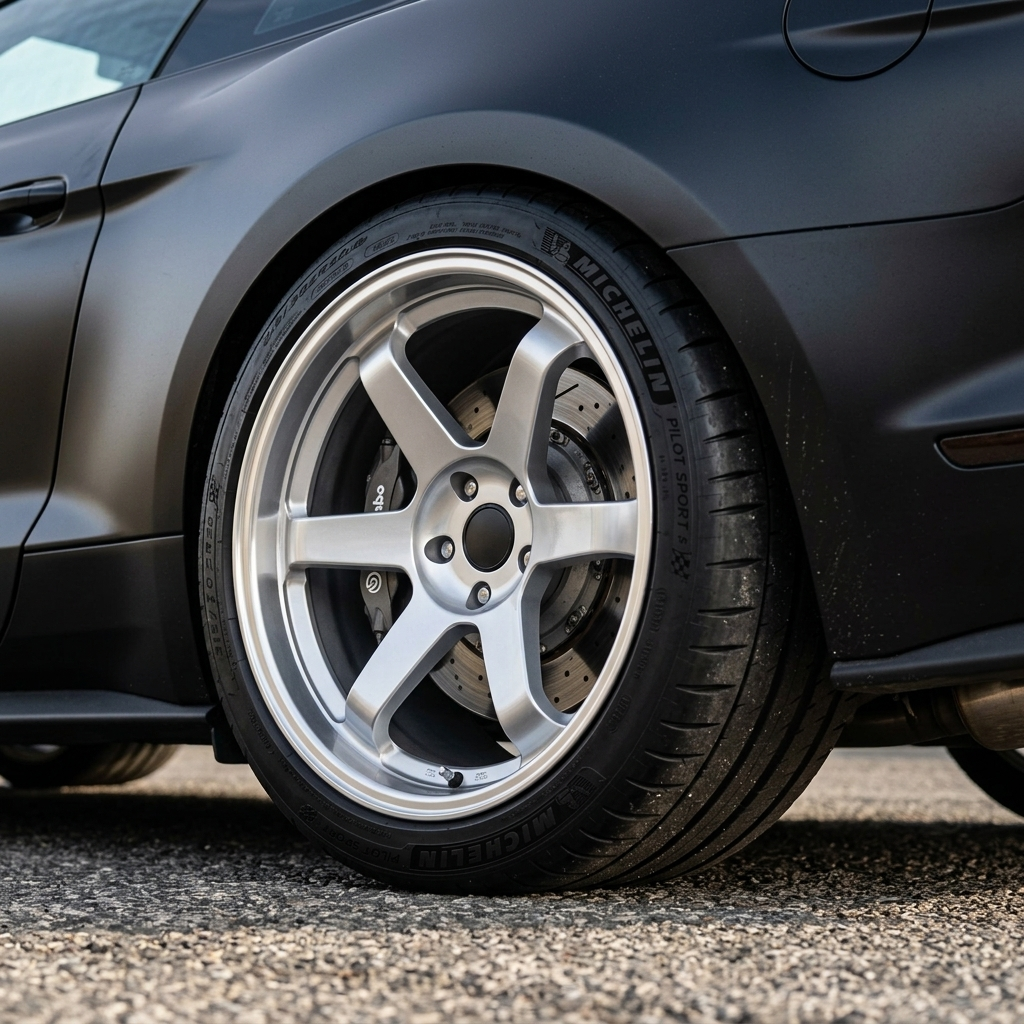
Best Cars for a Staggered Wheel Setup
Staggered fitments deliver the greatest benefit on rear-wheel-drive and rear-biased all-wheel-drive platforms where the rear axle handles the majority of power delivery. These are the vehicle categories where a staggered setup makes the most sense:
- RWD sports cars: Nissan 350Z/370Z, Toyota GR86/Subaru BRZ, Mazda MX-5, Nissan Silvia (S13/S14/S15). These lightweight platforms gain noticeably from the extra rear grip. Check our GR86 and BRZ fitment guide for specific staggered sizing recommendations.
- European performance sedans: BMW M3/M4, Mercedes-AMG C63, Audi RS5. Factory staggered setups are common on these platforms and aftermarket upgrades often go wider still.
- American muscle: Ford Mustang, Chevrolet Camaro, Dodge Challenger. These cars benefit enormously from wider rear rubber given their high torque output.
- Drift cars: Any RWD platform set up for drifting typically runs a staggered setup to maximise rear traction for initiating and controlling slides.
When to avoid staggered: Front-wheel-drive vehicles gain little from wider rears since the front axle handles both steering and power delivery. All-wheel-drive cars with a 50/50 or front-biased torque split (such as the Subaru WRX) generally perform better with a square setup for even grip distribution and the ability to rotate tyres.
How to Choose the Right Staggered Fitment
Choosing the correct staggered fitment requires balancing wheel width, tyre size, offset, and clearance. Getting these numbers wrong can result in rubbing, handling imbalances, or even compliance issues. Here is a step-by-step approach:
- Start with your OEM specifications. Check the factory wheel and tyre sizes for your vehicle. This establishes your baseline. Most OEM staggered setups already optimise for the vehicle’s suspension geometry.
- Decide your width increase. A 1-inch wider rear wheel is the most common upgrade step. Going 1.5 to 2 inches wider is possible but requires careful offset and clearance checks. Wider than 2 inches over stock usually needs suspension modification or guard rolling.
- Match the offset. Each width requires a specific offset range to maintain correct track width and clearance. Our wheel hardware and fitment essentials guide covers hub-centric rings, spacers, and bolt patterns for achieving the right fit.
- Select matching tyres. The rear tyre section width should match the wider rear wheel. As a rule of thumb, a 9-inch wheel pairs with 245–255mm tyres, a 10-inch wheel with 265–275mm, and an 11-inch wheel with 285–305mm.
- Verify clearance at full lock and under compression. Install one wheel and tyre and check for rubbing at full steering lock (front) and full suspension compression (rear). Use the ensuring wheel fitment guide for a complete checklist.
Staggered Wheels: Pros and Cons
A staggered wheel setup offers significant advantages for the right application, but it is not without compromise. Understanding both sides helps you make an informed decision before committing to a purchase.
Advantages
- Superior rear traction: More rubber on the driven axle means better acceleration grip, especially off the line and exiting corners.
- Improved cornering stability: Wider rear tyres resist oversteer and provide a more planted, confidence-inspiring feel at the limit.
- Aggressive stance: Wider rears fill the guards and give the car a purposeful, performance-oriented look that square setups cannot match.
- OEM-validated approach: Most rear-wheel-drive sports cars come staggered from the factory — you are working with the intended design philosophy, not against it.
Disadvantages
- No tyre rotation: Because the front and rear tyres are different sizes, you cannot rotate them to even out wear. This typically means the rear tyres wear faster and need replacing sooner.
- Higher running costs: You need to carry two different tyre sizes, and wider rear tyres are generally more expensive. According to the Australian Department of Infrastructure, aftermarket wheel and tyre changes must comply with Australian Design Rules (ADRs), and non-compliant modifications can affect vehicle registration.
- Reduced wet-weather grip at the front: Narrower front tyres have a smaller contact patch, which can reduce front-end grip in heavy rain — a consideration for Australian drivers who experience sudden downpours.
- Potential for understeer in some conditions: If the rear grip significantly exceeds the front, the car may push (understeer) in certain corner entries, particularly on low-grip surfaces.
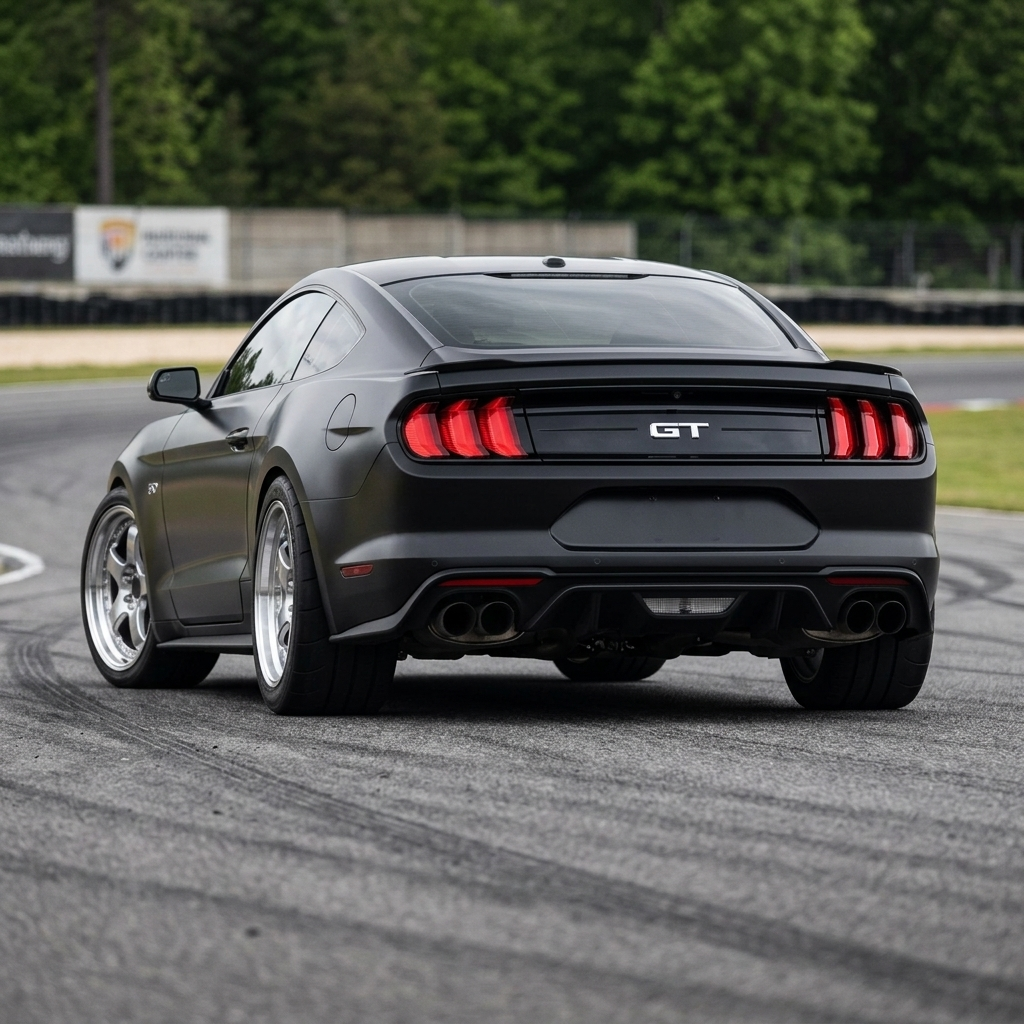
Staggered vs Square Setups
The choice between staggered and square depends on your vehicle’s drivetrain, your driving style, and your priorities. Here is a direct comparison to help you decide:
| Factor | Staggered Setup | Square Setup |
|---|---|---|
| Best for | RWD sports cars, muscle cars, drift builds | FWD, AWD, daily drivers, track cars wanting even wear |
| Rear traction | Superior — larger contact patch | Equal front and rear |
| Tyre rotation | Not possible | Yes — extends tyre life |
| Cost | Higher — two tyre sizes, faster rear wear | Lower — one tyre size, even wear |
| Stance / aesthetics | Aggressive, muscle car look | Clean, balanced look |
| Handling balance | Rear-biased grip, less oversteer | Neutral balance, more adjustable |
For dedicated track use where maximum grip matters and tyres are replaced frequently regardless, many competitive drivers actually prefer a square setup with wide tyres all around. The ability to rotate tyres and maintain even grip balance can outweigh the rear-traction advantage of staggered. However, for street-driven sports cars where aesthetics and straight-line traction are priorities, staggered remains the dominant choice.
Australian Compliance and Registration
If you are running a staggered wheel setup in Australia, compliance with state and territory vehicle modification laws is essential. The Australian Design Rules (ADRs) set the federal baseline for vehicle standards, while each state applies its own Vehicle Standards Bulletin (VSB) for aftermarket modifications.
Key compliance points for staggered setups in Australia:
- Tyre and wheel must not protrude beyond the guard line. Under VSB 14 (National Guidelines for Vehicle Modifications), wheels and tyres must be fully covered by the vehicle’s bodywork when viewed from above. This is especially important with wider rear wheels.
- Speedometer accuracy. Changing tyre overall diameter affects speedometer calibration. Australian regulations require speedometers to read within a defined accuracy band. Calculate the overall rolling diameter of both front and rear setups and ensure they stay within tolerance. A tyre size calculator can help verify this.
- Load and speed ratings. Replacement tyres must meet or exceed the vehicle manufacturer’s minimum load and speed ratings. Going wider does not exempt you from this requirement.
- Engineering certification. Wheel and tyre changes that exceed certain thresholds (typically more than 1 inch in diameter or 25mm in track width increase) may require an engineering certificate (blue slip in NSW, modification plate in QLD). Check your state’s requirements before purchasing.
For detailed guidance on aftermarket wheel sizing and how it affects performance and compliance, see our aftermarket wheel buying guide.
Frequently Asked Questions
What is a staggered wheel setup?
A staggered wheel setup uses wider wheels and tyres on the rear axle than the front. This configuration increases rear grip for better acceleration traction and cornering stability, and is most commonly used on rear-wheel-drive sports cars and performance vehicles. Factory examples include the BMW M3, Nissan 370Z, and Ford Mustang.
Can I run a staggered setup on an all-wheel-drive car?
It depends on the AWD system. Rear-biased AWD vehicles (like the Nissan GT-R or BMW xDrive M cars) can handle staggered setups because the system tolerates slight rotational speed differences between axles. However, symmetrical AWD systems (like Subaru’s) require all four tyres to be the same diameter to avoid drivetrain strain. Always consult your vehicle’s manual before fitting staggered wheels on an AWD platform.
Do staggered wheels affect tyre wear?
Yes. Because front and rear tyres are different sizes, you cannot rotate them to even out wear. The rear tyres typically wear faster due to carrying the drive force and being wider, which spreads the load over a larger area but also generates more friction. Expect to replace rear tyres more frequently — roughly 20–30% sooner than the fronts in typical use.
How much wider should rear wheels be in a staggered setup?
Most staggered setups use rear wheels that are 1 to 1.5 inches wider than the fronts, paired with tyres 30–40mm wider in section width. For example, a common setup might be 8.5-inch front wheels with 235mm tyres and 9.5-inch rear wheels with 265mm tyres. Going more than 2 inches wider than the front typically requires suspension modifications or guard work.
Are staggered wheels legal in Australia?
Staggered wheels are legal in Australia provided they comply with the Australian Design Rules and your state’s Vehicle Standards Bulletin. The key requirements are that tyres must not protrude beyond the guards, speedometer accuracy must be maintained, and load/speed ratings must meet or exceed factory specifications. Significant width increases may require an engineering certificate.
What Kaizen wheel designs work best in a staggered setup?
Any Kaizen wheel design can be ordered in staggered sizes. Popular choices for staggered applications include the Kaizen 001 (six-spoke JDM motorsport style), the Kaizen 002 (split five-spoke with deep concavity that looks stunning in wider rear widths), and the Kaizen 006 (six-spoke with deep dish — built for the street-and-track look). All designs are available in cast or forged construction with custom colour options.
References and Sources
- Tire Rack — Staggered Fitments: Pros, Cons, and What You Need to Know
- SAE International — Technical Papers on Tyre Contact Patch and Vehicle Dynamics
- Australian Government Department of Infrastructure — Australian Design Rules (ADRs)
- National Transport Commission — Vehicle Standards Bulletin 14 (VSB 14): National Guidelines for Vehicle Modifications
Last updated: 25 March 2026


