
Wheel Offset, PCD and Centre Bore Explained: How to Get Perfect Fitment
Buying wheels should be exciting, not confusing. But once you start looking at specs like ET35, 5×114.3 and 73.1CB, it is easy to feel like you need a translator before you can even choose a set.
The truth is that wheel fitment comes down to a few core measurements. Get them right and your new wheels will sit properly, clear the brakes and suspension, and bolt onto the car the way they should. Get them wrong and you can end up with vibration, guard rubbing, poor handling or wheels that simply do not fit at all.
In this guide, we will break down the three wheel specs that matter most: wheel offset, PCD and centre bore. You will learn what each one means, how they work together, how to read a wheel spec string, and what to watch for when buying aftermarket wheels in Australia. If you are comparing options for your daily driver, 4WD, performance build or staggered setup, this is the practical wheel fitment guide you want before you order.
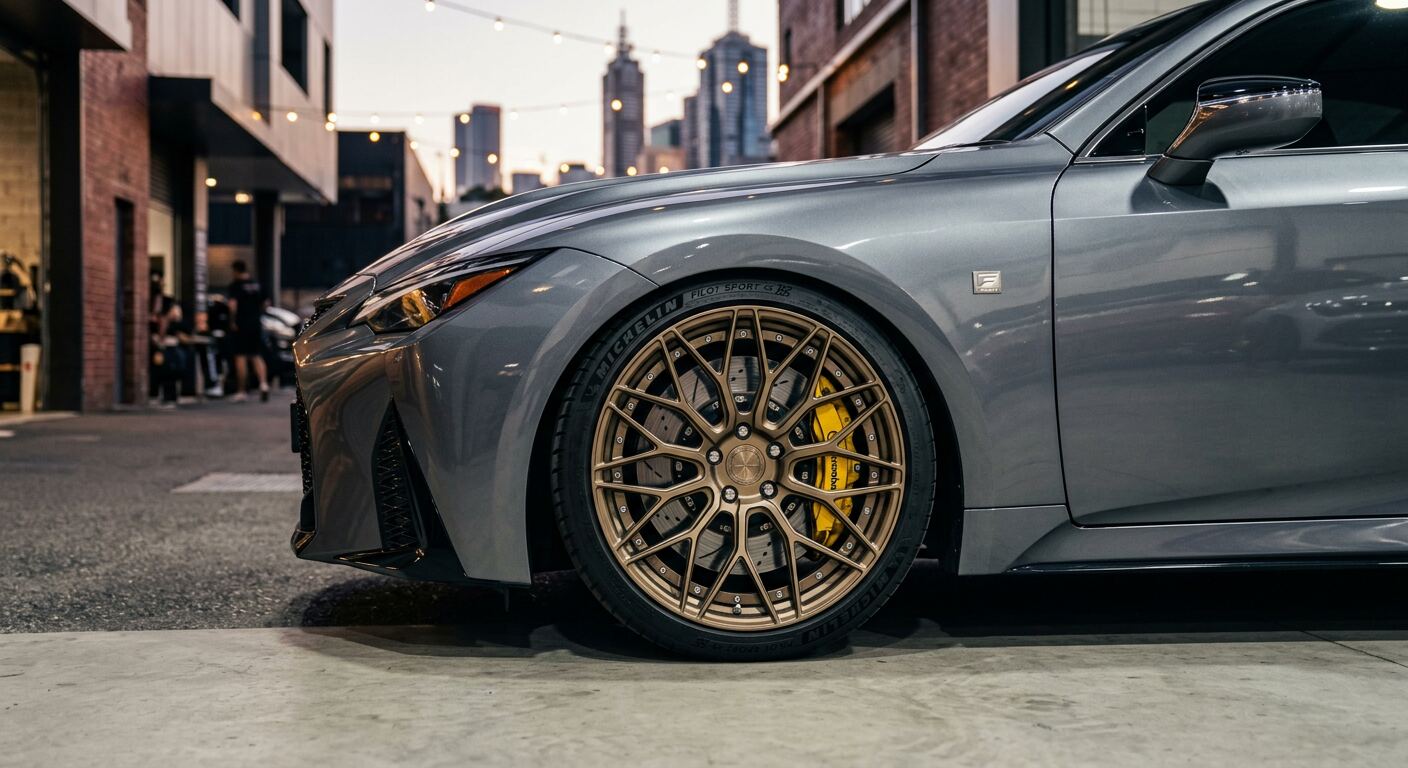
What is wheel offset?
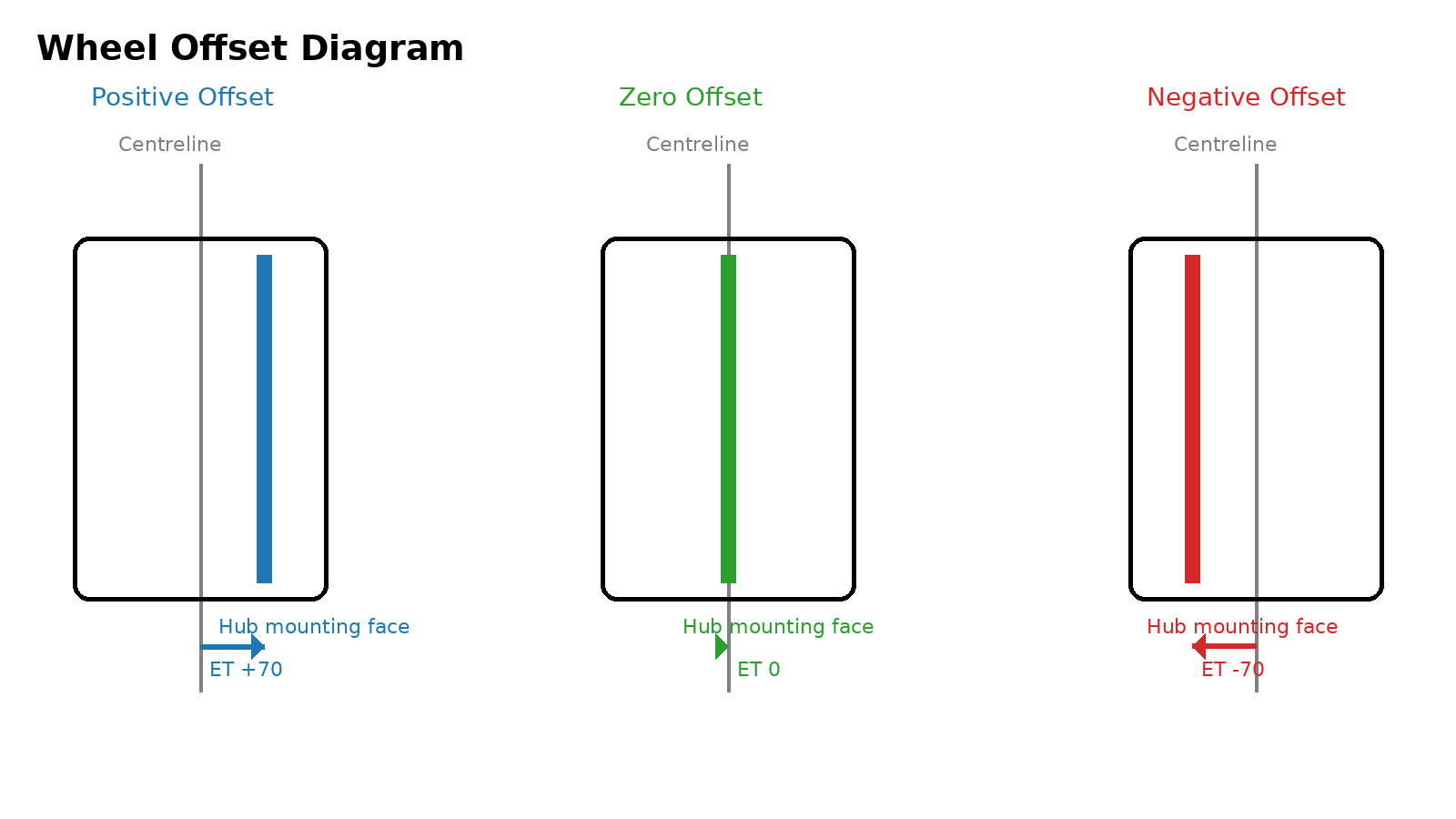
Wheel offset is the distance between the wheel’s mounting face and the wheel’s centreline. It is usually shown as ET, which comes from the German word Einpresstiefe. In simple terms, et offset tells you how far in or out the wheel sits once it is bolted to the hub.
Offset is measured in millimetres, and it changes both appearance and clearance. That means it affects how flush the wheels look with the guards, but also whether the inner barrel clears the strut, control arms and brake components.
Positive offset
A positive offset wheel has its mounting face positioned toward the outside face of the wheel. This pulls the wheel further inward under the car. Most modern passenger cars use positive offset wheels.
Example: an 18×8 ET45 wheel will generally sit further inward than an 18×8 ET35 wheel.
Zero offset
Zero offset means the mounting face sits exactly on the wheel’s centreline. This is less common on modern road cars, but it is a useful reference point for understanding how offset works.
Negative offset
A negative offset wheel has its mounting face positioned toward the inside of the wheel. This pushes the wheel further outward. You will often see negative offsets on aggressive 4WD and off-road setups where a wider track and deeper dish look are part of the goal.
Why offset matters
Offset is not just cosmetic. If the offset is too high, the wheel can sit too far inward and foul on suspension or brake hardware. If the offset is too low, the wheel can poke too far outward, rub on the guards, change scrub radius and put extra stress on bearings and steering components.
That is why proper offset selection should always be matched to the vehicle, wheel width, tyre size and intended use. A wheel that fits one model perfectly can be completely wrong for another even if the diameter looks similar.
What is PCD (Pitch Circle Diameter)?
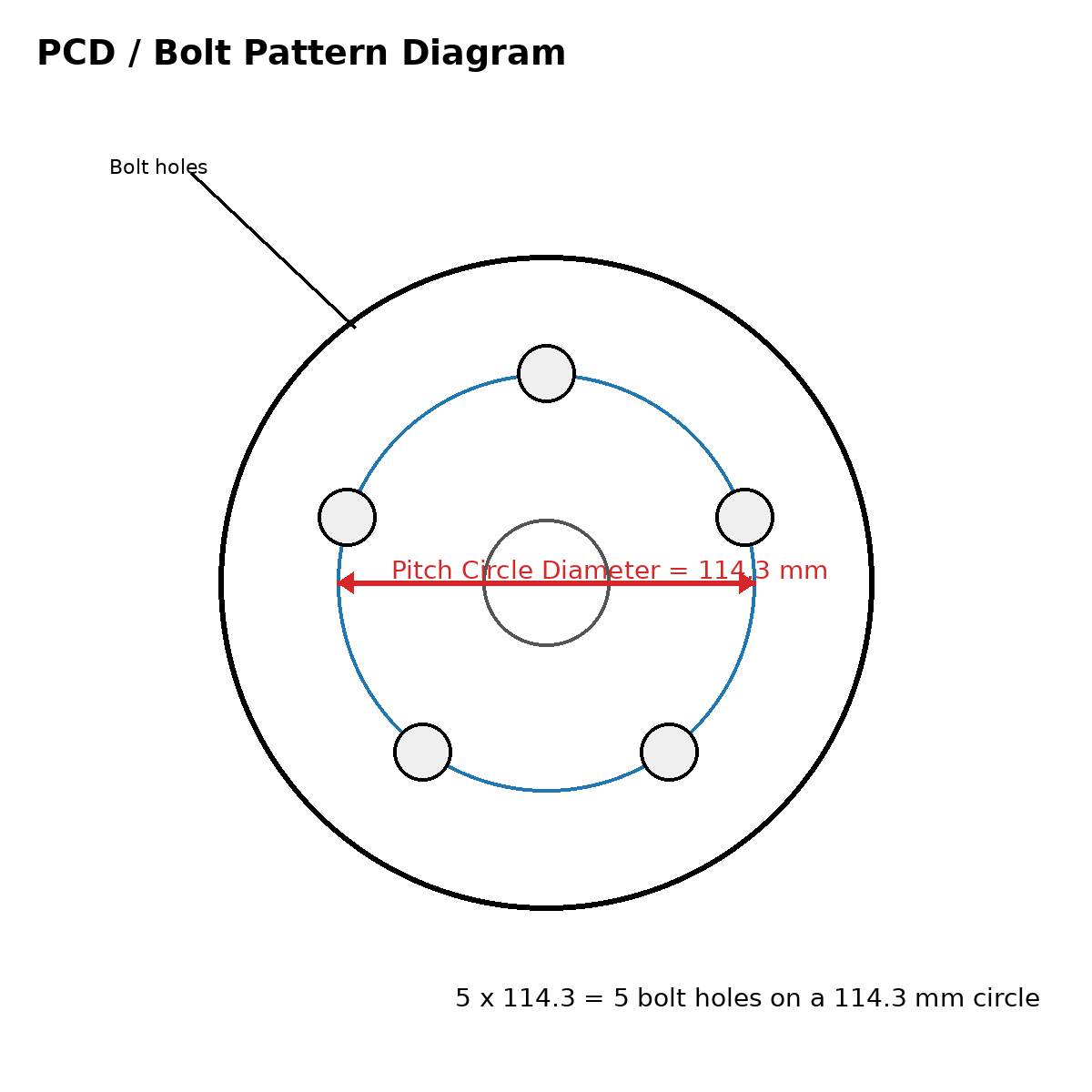
PCD stands for Pitch Circle Diameter. It describes your wheel’s bolt pattern: how many wheel studs there are and the diameter of the circle they form.
You will usually see it written like this:
- 4×100 = 4 stud holes on a 100 mm circle
- 5×114.3 = 5 stud holes on a 114.3 mm circle
- 6×139.7 = 6 stud holes on a 139.7 mm circle
The first number is the number of studs. The second number is the diameter of the bolt circle in millimetres.
Why PCD matters
If the bolt pattern is wrong, the wheel does not fit. Full stop. A 5×114.3 wheel will not correctly mount to a 5×100 hub. A 6×139.7 wheel will not fit a 5-stud vehicle. This is one of the first specs that must match before you even worry about style, finish or spoke design.
Some people hear that one PCD is ‘close enough’ to another. It is not. Near-match patterns are a recipe for unsafe mounting, vibration and damaged studs.
Common PCD examples
Here are a few common patterns you will see in the Australian market:
- 4×100 – common on many smaller hatchbacks and older compact cars
- 5×100 – common on Toyota 86 / Subaru BRZ platforms and some Subaru models
- 5×114.3 – very common across Japanese and Korean performance and passenger cars
- 5×120 – common on many BMWs and some Holden performance applications
- 6×139.7 – common on utes and 4WDs such as Hilux, Ranger and Patrol variants
If you have ever searched for a pcd chart, this is why: it is one of the fastest ways to narrow down whether a wheel is even in the ballpark for your car.
What is centre bore or hub bore?
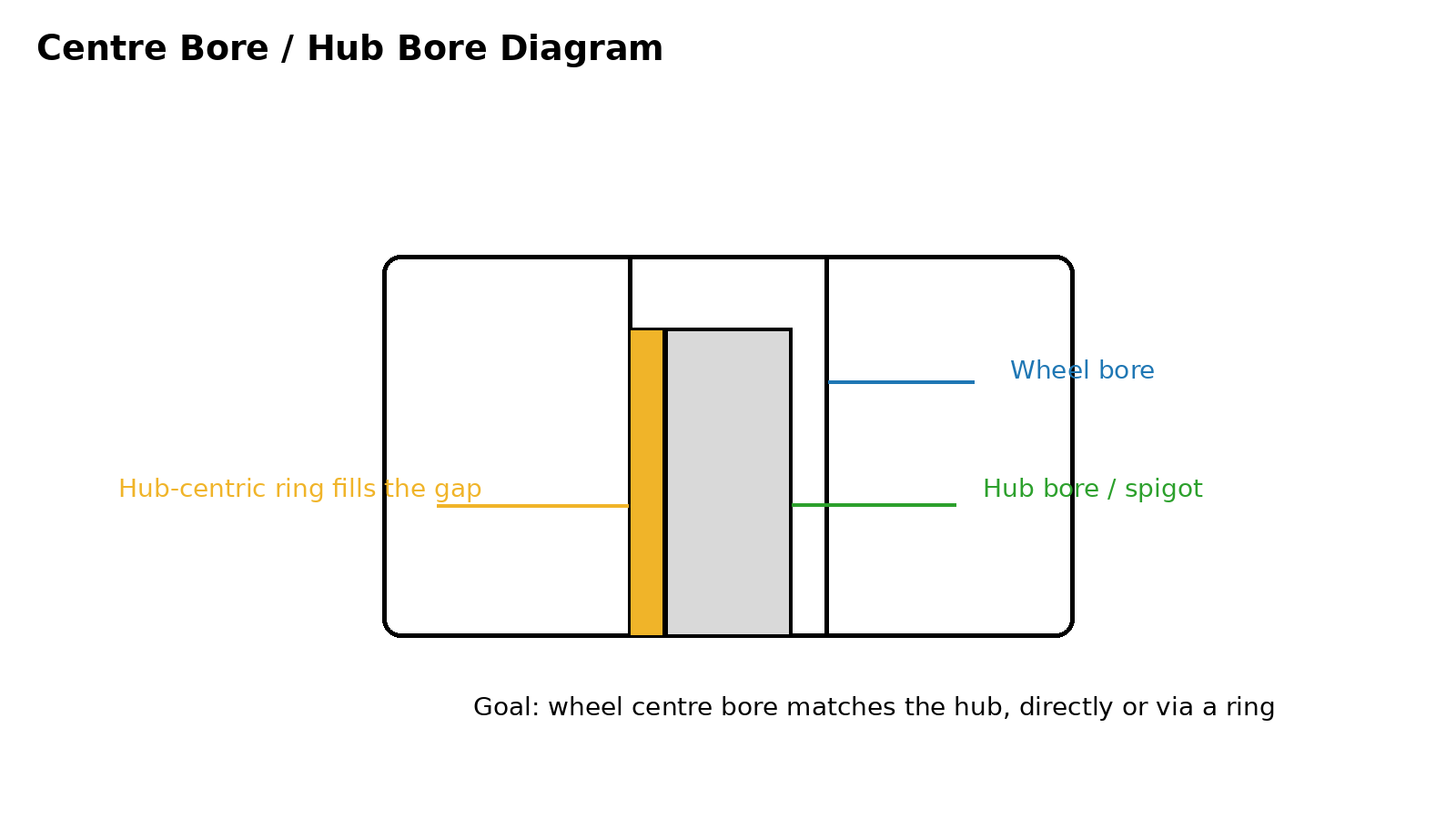
The centre bore is the size of the hole in the middle of the wheel. The hub bore on the car is the circular lip on the hub that the wheel locates onto.
For correct fitment, the wheel’s centre bore must be:
- the same size as the vehicle hub, or
- larger than the hub and then reduced with a hub-centric ring
If the wheel bore is smaller than the vehicle hub, the wheel simply will not go on.
Why centre bore matters
Centre bore is about locating the wheel accurately on the hub. When the wheel is properly centred, it is far easier to achieve a smooth, vibration-free fit. When the bore is too large and no hub ring is used where needed, the wheel can end up being located primarily by the wheel nuts rather than the hub.
That leads directly to one of the most common questions in fitment: hub-centric vs lug-centric.
Hub-centric vs lug-centric fitment
A hub-centric setup means the wheel is centred by the hub spigot. This is the preferred arrangement for most road cars and the standard most enthusiasts aim for.
A lug-centric setup means the wheel is centred mainly by the taper of the wheel nuts or bolts. Some vehicles and wheel designs can technically run this way, but it leaves less margin for error during installation and is more likely to create vibration if the wheel is not seated perfectly.
If an aftermarket wheel has a larger centre bore than your car, quality hub-centric rings are the simple fix. They do not change the wheel’s PCD or offset, but they do help the wheel sit concentrically on the hub as intended.
How wheel offset, PCD and centre bore work together
Think of wheel fitment as a triangle:
- PCD decides whether the wheel can physically bolt onto the stud pattern
- Centre bore decides whether the wheel locates properly on the hub
- Offset decides where the wheel sits in relation to the suspension and guards
You need all three to work together. Matching only one or two is not enough.
For example, a wheel might have the correct 5×114.3 bolt pattern for your car, but if the centre bore is too small it still will not fit. Or it may bolt on and locate correctly, but if the offset is too aggressive it can rub on the guard or poke past the body line. Good fitment is never one-dimensional.
That is why serious wheel suppliers do not just ask what diameter you want. They ask about your vehicle, brake package, ride height, tyre size, suspension setup and whether you want a flush, conservative or staggered look. The right answer is a package, not a single number.
How to read your wheel specs
A spec string like 18×8 ET35 5×114.3 73.1CB looks technical, but once you know the parts it is straightforward.
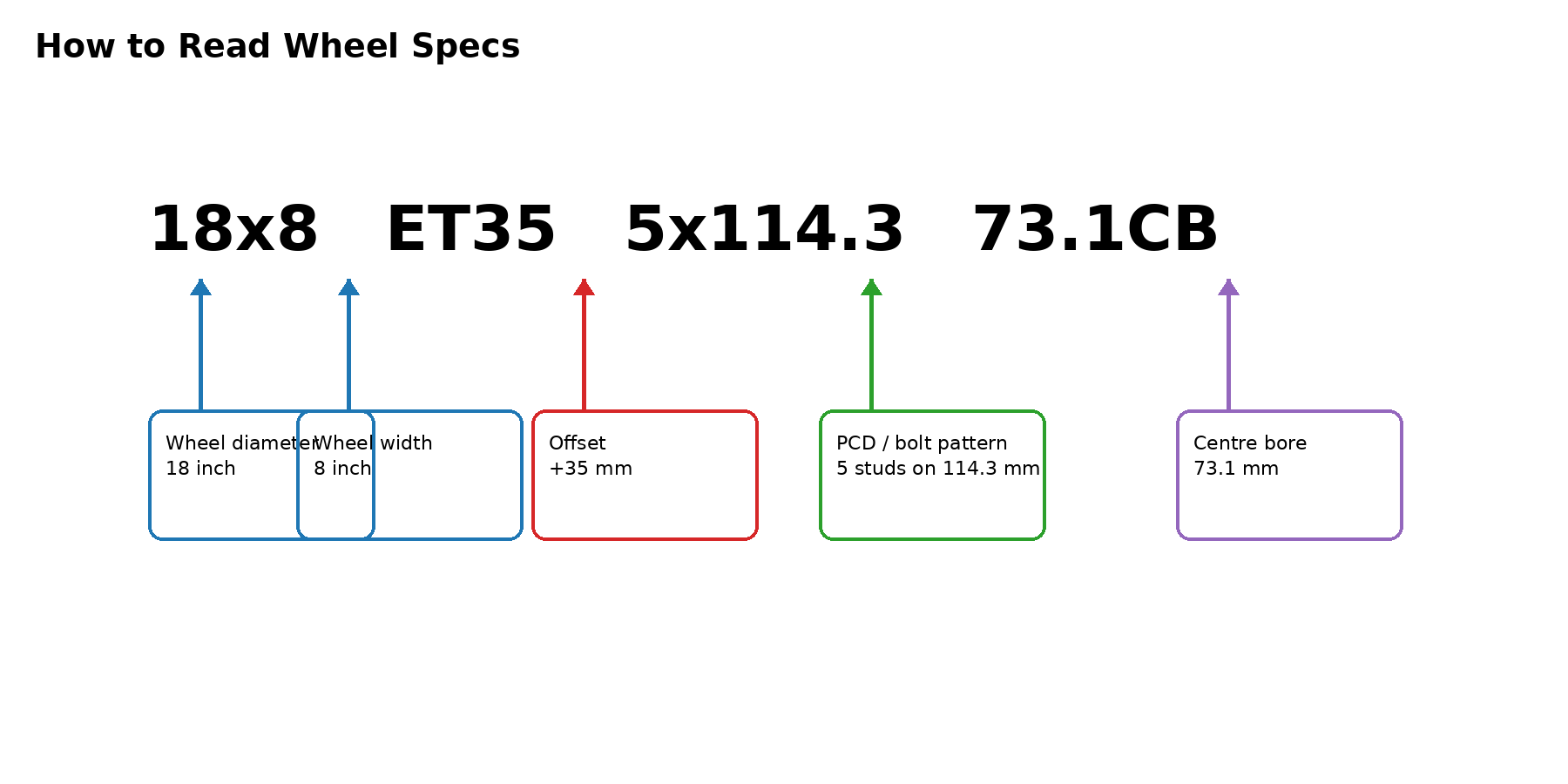
- 18 = wheel diameter in inches
- 8 = wheel width in inches
- ET35 = offset, meaning the mounting face is 35 mm positive from the centreline
- 5×114.3 = bolt pattern, 5 studs on a 114.3 mm pitch circle
- 73.1CB = centre bore of 73.1 mm
Once you can read this string, comparing options becomes much easier. You are no longer looking at just style or diameter. You are looking at the actual fitment data that determines whether a wheel is suitable.
Common wheel fitment mistakes and how to avoid them
1. Assuming same diameter means same fitment
Two wheels can both be 18-inch and fit very differently. Width, et offset, hub bore and bolt pattern still matter.
2. Chasing an aggressive look without checking clearance
Low offsets and wide wheels can look great, but not if they cause rubbing on the guards, liners or suspension. The best fitment is the one that looks right and works properly.
3. Mixing up similar PCDs
5×100 and 5×114.3 are not interchangeable. Neither are other near-match patterns. Always verify the exact PCD.
4. Ignoring centre bore
A correct PCD does not mean the wheel is automatically hub-compatible. Check the centre bore and use hub-centric rings when needed.
5. Forgetting brake clearance
Big brake packages, performance calipers and even some factory brake setups can reduce wheel options. Offset is part of the story, but spoke design and barrel shape matter too.
6. Buying without considering tyre size
A wheel and tyre package has to work together. A safe, practical result depends on overall diameter, guard clearance, load rating and intended use.
Fitment examples for common Australian vehicles
Australian buyers often shop across a mix of performance cars, family cars, utes and 4WDs, so here are a few common examples. These are general fitment references only and can vary by generation, trim, brake package and market spec, but they are useful starting points when comparing wheel options.
- Toyota Hilux – commonly 6×139.7 PCD with a 106.1 mm centre bore. Factory-style offsets are often positive, while aftermarket 4WD wheels commonly move lower or negative depending on track and guard clearance goals.
- Ford Ranger – commonly 6×139.7 PCD with around 93.1 mm centre bore. Offset choice is critical because Rangers can quickly run into inner clearance or guard poke issues if you go too aggressive.
- Nissan Patrol – many GU/Y61 Patrol applications use 6×139.7 PCD and are popular candidates for wider, more aggressive off-road offsets. Always check the exact model and hub dimensions before ordering.
- Subaru WRX – many later WRX models use 5×114.3 PCD with a 56.1 mm centre bore, while earlier models can differ. This is a classic example of why year and generation matter.
- Toyota 86 / Subaru BRZ – commonly 5×100 PCD with a 56.1 mm centre bore. Factory offsets are typically quite positive, so wheel width and offset need to be chosen carefully for flush street fitment.
- Mazda 3 – many generations use 5×114.3 PCD with a 67.1 mm centre bore. Good road fitment usually comes from conservative width and offset choices rather than chasing a huge poke.
These examples show why a generic one-size-fits-all wheel listing is not enough. Even when two cars share a PCD, they may have different centre bores, brake clearances and offset requirements. That is exactly where a custom-fit supplier adds value.
Choosing aftermarket wheels in Australia without guesswork
When you are shopping for aftermarket wheels Australia buyers often focus first on design, then diameter, then price. The smarter way is to start with fitment and then choose the look you want within the right spec window.
That means asking:
- What is my exact PCD?
- What centre bore does my car require?
- What offset range works for my width, tyre size and suspension setup?
- Do I need a square setup or true staggered fitment?
- Will the wheel clear my factory or upgraded brakes?
Once those questions are answered, the buying process becomes dramatically easier. Instead of gambling on whether a wheel might fit, you are selecting from options that are already engineered for the vehicle.
Why custom fitment matters
Custom wheels are not just about unique finishes and better styling. They allow you to order the correct width, diameter and offset for your build rather than forcing your car to adapt to an off-the-shelf compromise.
That matters even more if you want:
- a flush fitment without rubbing
- a staggered front and rear setup
- brake upgrade clearance
- 4WD stance without guesswork
- a specific concave profile or spoke face
Done properly, custom fitment gives you the look you want without sacrificing drivability, safety or practicality.
Final take: get the fitment triangle right
If you remember one thing from this guide, make it this: wheel offset, PCD and centre bore must all be correct together. PCD gets the wheel onto the studs. Centre bore gets it centred on the hub. Offset gets it sitting in the right place.
That is the fitment triangle. Ignore one corner and the whole setup can go wrong.
If you are serious about buying wheels that actually suit your car, start with the specs, not the guesswork.
Need help choosing the right fitment?
At Kaizen Wheels, we build wheels to suit the vehicle rather than forcing you into generic stock specs. That means the right bolt pattern, the right hub bore, the right et offset, and the right overall package for how you drive.
If you want a clean street setup, a proper staggered fitment, or a tougher 4WD stance without trial and error, shop Kaizen custom wheels or contact us for fitment advice. We will help you get the specs right before your wheels are built.