

Best Aftermarket Wheels for Toyota Chaser / Mark II: Fitment Guide
title: “Best Aftermarket Wheels for Toyota Chaser / Mark II: Fitment Guide”
slug: “best-aftermarket-wheels-for-toyota-chaser-mark-ii-fitment-guide”
meta_title: “Best Aftermarket Wheels for Toyota Chaser / Mark II: Fitment Guide”
meta_description: “A detailed Toyota Chaser and Mark II wheel fitment guide covering factory specs, 5×114.3 fitment, ideal wheel sizes, offsets, tyre pairings, brake clearance, suspension, and common mistakes.”
excerpt: “A deep wheel fitment guide for the Toyota Chaser and Mark II, including factory specs, aftermarket sizing strategy, offset advice, tyre pairing, clearance planning, and practical setup tips.”
category: “Fitment Guides”
tags:
– Toyota Chaser
– Toyota Mark II
– JZX100
– JZX90
– wheel fitment
– aftermarket wheels
– 5×114.3
– offset
—
Best Aftermarket Wheels for Toyota Chaser / Mark II: Fitment Guide

TL;DR
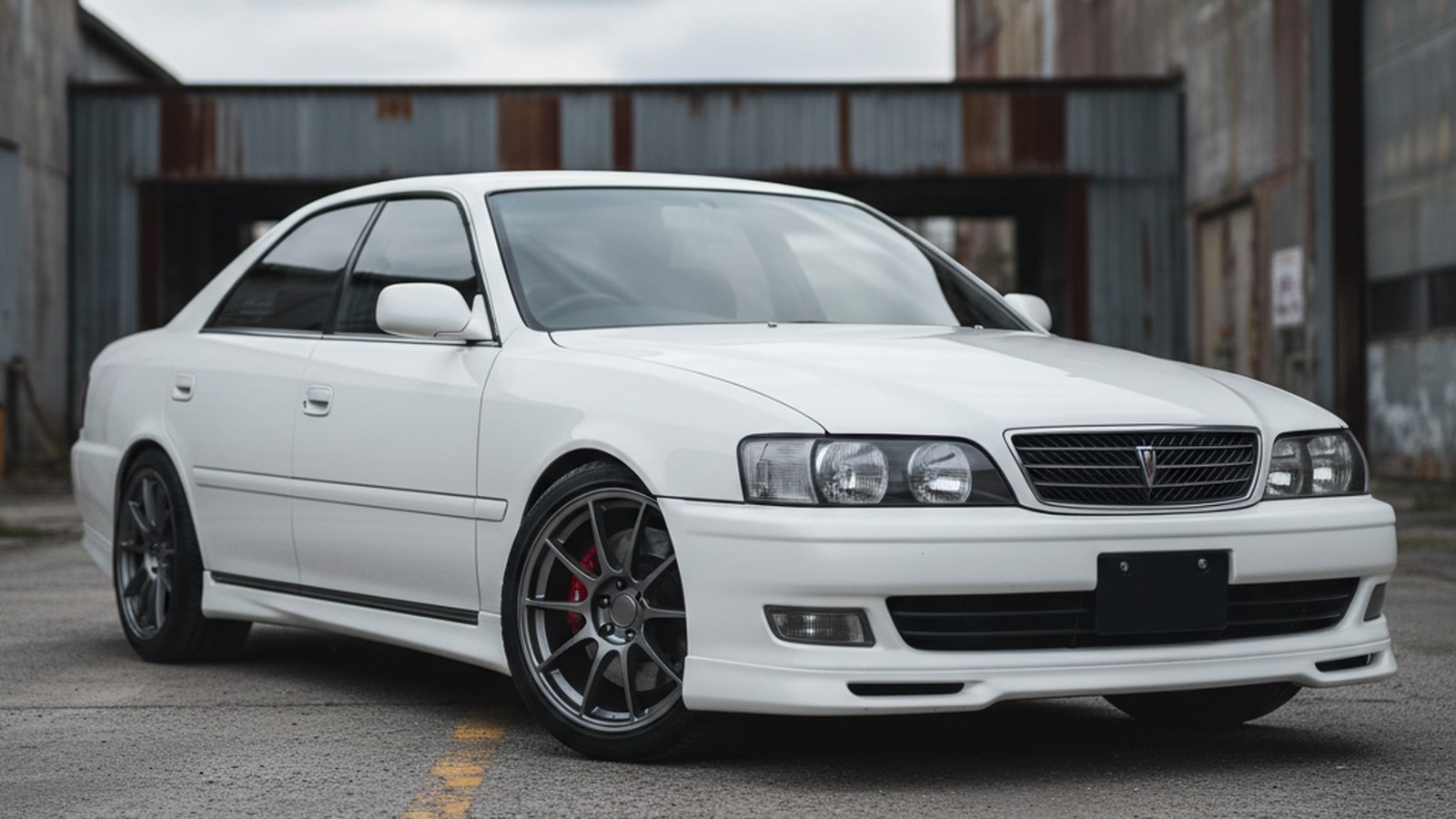
The Toyota Chaser and Mark II are among the most rewarding rear-wheel-drive Toyota platforms to fit with aftermarket wheels because the chassis naturally suits a stronger stance without needing extreme numbers to look right. Most enthusiast-focused variants commonly use a 5×114.3 bolt pattern and a 60.1 mm centre bore, with factory wheel sizing leaning conservative by modern standards. For most builds, 18-inch wheels offer the best balance of visual presence, tyre choice, brake clearance and everyday drivability.
The key to getting a Chaser or Mark II right is understanding that these cars respond to fitment as a complete system. Wheel width, offset, tyre shape, ride height and brake package all interact. A setup that looks aggressive in isolation can still feel wrong on the road if it compromises steering clearance or suspension travel. Before choosing sizes, it helps to refresh the fundamentals in Wheel Offset, PCD and Centre Bore Explained.
Table of Contents
- Toyota Chaser / Mark II Platform Overview
- Factory Fitment Specs
- Best Wheel Sizes for Different Builds
- How Offset Changes Fitment on the Chaser / Mark II
- Square vs Staggered Setups
- Brake Clearance and BBK Considerations
- Suspension, Lowering and Arch Clearance
- Tyre Pairing Guide
- Wheel Construction and Weight
- Common Fitment Mistakes
- Practical and Safety Considerations
- FAQ
- References
Toyota Chaser / Mark II Platform Overview
The Toyota Chaser and Mark II sit in a sweet spot that makes them especially attractive for aftermarket wheel fitment. They are four-door rear-wheel-drive sedans with long-wheelbase composure, strong front-engine proportions and enough motorsport and tuner heritage that enthusiasts already expect them to wear a more assertive wheel package than the factory delivered. That heritage matters because these cars are often built with a very specific intent. Some become understated street sedans. Some become fast road or circuit cars. Some become drift builds. Others chase period-correct touring style. Each of those directions changes what counts as good fitment.
The most common enthusiast conversation centres on the X90 and X100 generations, particularly turbocharged and performance-focused trims, but the broader Chaser / Mark II family follows the same basic fitment logic. Factory wheel sizing was generally modest, with relatively narrow widths and conservative positive offsets designed around ride comfort, steering stability and production tolerances. That means even a mild aftermarket setup can transform the car visually. The mistake is assuming that because the arches can look empty in standard form, the answer is automatically maximum width and minimum offset.
These cars look best when the fitment sharpens their proportions rather than overwhelms them. The body lines are clean, upright and purposeful. A well-chosen wheel makes the car look lower, longer and more settled. A poorly chosen wheel can make it look over-styled, under-tyred or obviously compromised in motion. The Chaser and Mark II are also sensitive to front-end feel. Push the front fitment too hard and the steering loses some of the precision that gives the platform its appeal in the first place.
That is why the best wheel setup for this platform is rarely the most extreme one. The strongest builds usually rely on proportion, tyre support and clear fitment planning. On a Chaser or Mark II, the difference between a setup that merely looks aggressive and one that genuinely feels right often comes down to a few millimetres of offset, the exact tyre model chosen and how much suspension travel remains once the car is lowered.
Factory Fitment Specs
- Platform: Toyota Chaser / Mark II, commonly discussed in X90 and X100 performance applications
- Bolt pattern: commonly 5×114.3 on enthusiast-focused rear-wheel-drive variants
- Centre bore: 60.1 mm
- Factory wheel diameters: commonly 15 or 16 inches depending on trim and generation
- Typical factory widths: usually around 6 to 7 inches
- Typical factory offset zone: relatively high positive offsets, often around the +50 region on factory-style wheels
- Layout: front-engine, rear-wheel drive
Those numbers are the foundation, but they are not the whole fitment answer. A wheel with the right PCD can still fail to clear the brakes. A wheel with the right diameter can still rub the coilover. A wheel with the right width can still sit badly if the offset is wrong. Fitment on the Chaser / Mark II has always been about the relationship between these variables rather than any single number on a spec sheet.
The 60.1 mm centre bore is worth noting because many aftermarket wheels are produced with a larger centre bore to suit multiple applications. That is not a problem by itself, but it does mean the correct hub-centric ring should be used where required. A wheel that is centred only by the studs rather than properly locating on the hub can create vibration, inconsistent seating and avoidable installation issues.
It is also important to remember that many surviving cars no longer match factory condition. Coilovers, adjustable arms, bigger brakes, altered alignment and different ride heights all change what a safe or sensible wheel spec looks like. Factory numbers tell you where Toyota started. They do not tell you where your specific car is now.
Best Wheel Sizes for Different Builds
The Chaser and Mark II can carry a wide range of sizes, but the best choice depends on the purpose of the car. In broad terms, most successful setups fall into three categories: 17-inch, 18-inch and 19-inch. Each has a distinct character.
17-inch wheels: balanced, period-correct and functional
- 17×8 works well as an OEM-plus street option
- 17×8.5 is a strong choice for balanced road use
- 17×9 can suit more purposeful builds with the right tyre and offset
Seventeen-inch wheels suit the platform surprisingly well if the goal is a more authentic period-correct look or a build that values tyre sidewall and road feel over maximum visual drama. On a Chaser or Mark II, 17s can look exactly right when paired with sensible ride height and the right face design. They preserve compliance, protect steering feel and often make it easier to build a car that still works properly over imperfect roads.
The limitation is mostly visual. On cars with a more modern style brief, 17s can sometimes look slightly small in the arch unless the wheel design is especially strong or the car is set up carefully. That does not make them a bad option. It just means they work best for owners who prefer balance and authenticity over oversized presentation.
18-inch wheels: the all-round sweet spot
- 18×8.5 is excellent for daily and fast-road use
- 18×9 is one of the most versatile sizes on the platform
- 18×9.5 suits aggressive street, drift and strong rear fitment applications
If there is one diameter that consistently works across most Chaser and Mark II builds, it is 18 inches. This size fills the arches properly, gives access to a broad range of tyre sizes and usually maintains enough sidewall to keep the car feeling natural on the road. For most owners, 18s provide the best mix of aesthetics and real-world function.
An 18×8.5 or 18×9 setup often gives the car exactly what it needs: stronger presence, better tyre support and more room to fine-tune offset without forcing the car into a stance-only direction. This is also the diameter where street-driven cars and hard-driven cars overlap most comfortably. A good 18 can work on a clean road car, a grip-oriented build or a drift car without looking out of place.
19-inch wheels: visual impact with a narrower margin for error
- 19×8.5 front and 19×9.5 rear suits visual street builds
- 19×9 front and 19×10 rear can work on more assertive lowered setups
Nineteens are not automatically too large for the Chaser / Mark II, but they do shift the build towards style-first fitment. When chosen carefully, they give the car a harder-edged, more contemporary presence and can suit the long, clean sedan profile extremely well. The problem is that they reduce your tolerance for mistakes. Sidewall becomes shorter, ride quality becomes firmer, wheel weight matters more and tyre selection becomes more critical.
A light, well-designed 19 can work beautifully. A heavy cast 19 with an awkward tyre choice usually feels worse than a sorted 18-inch package. Bigger is not inherently better on this platform. It simply reflects a different priority.
How Offset Changes Fitment on the Chaser / Mark II
Offset is the number that decides whether a Chaser or Mark II setup looks clean and planted or simply overreaches. The platform has enough arch to tolerate stronger fitment than many sedans from the same era, but it still rewards moderation. Too conservative and the car can look slightly tucked and unfinished. Too aggressive and the steering, suspension movement and tyre clearance all start to suffer.
As always, offset needs to be considered alongside width. An 18×9 +35 does not sit like an 18×8 +35. The wider wheel adds material both inward and outward from the mounting face, so copying offset numbers without matching width is one of the easiest ways to make a mistake. That is especially true on the Chaser / Mark II because so many internet fitment references are taken from cars that also run different tyres, different camber settings and different suspension hardware.
For street-driven cars, moderate positive offsets generally work best. They tend to place the wheel confidently within the guard while preserving useful inner clearance and avoiding unnecessary stress on the steering side of the setup. On more aggressive builds, lower positive offsets can deliver the stronger face and stance people want, but they should be chosen with a clear understanding of how much front lock, rear compression and tyre shoulder room remain.
The front of the car is usually the more sensitive end. A strong front fitment can look excellent, but once the wheel moves too far outward, the margin under steering lock disappears quickly. The rear is generally more forgiving visually and physically, which is why the platform often carries a slightly stronger rear setup without looking unnatural. Even then, the best result usually comes from an offset that complements the body rather than fights it.
If you need a refresher on how to interpret offset properly before shopping, The Ultimate Aftermarket Wheel Buying Guide is a useful reference point. On a Chaser or Mark II, understanding offset properly saves far more trouble than chasing the most aggressive number available.
Front offset strategy
The best front fitment is usually one that sharpens the stance without making the front axle nervous or difficult. The wheel should sit decisively in the guard, but the tyre still needs room to turn and compress. Once the car is lowered, tyre shoulder shape and ride height matter just as much as wheel offset itself. This is why a front spec that clears on one build may rub badly on another even when the wheel dimensions appear identical.
Rear offset strategy
The rear axle can carry more visual aggression. The car’s rear-wheel-drive stance and straight body lines naturally suit a fuller rear wheel. But there is still a difference between purposeful and excessive. Too much rear poke can force tyre stretch, make compression clearance inconsistent and give the car a style-first feel that is not always flattering on a sedan chassis intended to look clean and composed.
Square vs Staggered Setups
The Toyota Chaser and Mark II are unusually flexible in that both square and staggered fitment can make sense. The right answer depends on how the car is used.
Square setups use the same wheel and tyre size at all four corners. They have several practical advantages:
- tyres can usually be rotated front to rear
- the setup is easier to buy and maintain
- front-end grip can be improved by avoiding a narrow factory-style front bias
- the car often feels more consistent and predictable in fast road use
This is one reason square setups are popular on enthusiast Chaser and Mark II builds. They suit road use, circuit work and many drift applications because they simplify tyre management and give the chassis a cleaner balance. An 18×8.5 or 18×9 square setup is often an excellent place to start.
Staggered setups use a wider rear wheel and tyre than the front. That also suits the platform for several reasons:
- the rear-wheel-drive layout supports a stronger rear package
- the body shape often looks more planted with a mild rear bias
- the extra rear width can help traction and visual presence
- it suits more style-led or grand touring builds well
Where staggered fitment goes wrong is when the difference between front and rear becomes too dramatic. A sensible stagger supports the car. An oversized rear paired with an under-supported front makes the steering feel like an afterthought. That is why the front should always be solved first, then the rear should be matched in a way that completes the car. If you want a deeper look at when staggered sizing helps and when it is mostly aesthetic, Kaizen’s staggered wheel setup guide is worth reading.
Brake Clearance and BBK Considerations
Brake clearance matters more on the Chaser / Mark II than many people expect because so many examples now run upgraded hardware. Even where the factory brakes were modest, many owners have since fitted larger calipers, Supra brake conversions or aftermarket big brake kits. Once that happens, wheel fitment becomes a three-dimensional clearance problem, not just a diameter question.
The first thing to understand is that wheel diameter alone does not guarantee fitment. Two 18-inch wheels can behave completely differently on the same caliper because spoke design, pad thickness behind the face and barrel contour vary from one design to another. One wheel might clear easily while another touches the caliper face even though the headline numbers look identical.
There are three areas to check:
- Radial clearance: space between the caliper and the inner barrel
- Axial clearance: space between the caliper face and the wheel spokes
- Hub fitment: correct bore size, proper seating and clean mounting surfaces
Spacers are sometimes used to solve spoke clearance problems, and in some cases that is fine. But every spacer changes the effective offset, which can then create outer arch issues or alter steering feel. If a wheel only works with a large spacer, it is worth stepping back and asking whether it was the right choice in the first place.
For cars on standard brakes, clearance is usually easier to manage, but even then it should be checked rather than assumed. The Chaser / Mark II platform has enough variation in wheel design and brake upgrades that guesswork is rarely worth it.
Suspension, Lowering and Arch Clearance
Lowering is where Chaser and Mark II fitment becomes either excellent or frustrating. A modest drop can make the car look dramatically better because the body shape responds well to a tighter wheel-to-arch relationship. At the same time, lowering reduces the usable fitment window and makes tyre choice, alignment and ride quality much more important.
At the front, the main issues are steering lock and compression. A wheel that clears perfectly while parked can still rub the liner or arch under lock once the suspension begins moving. A broad-shouldered tyre makes that worse, as does an offset that pushes the front wheel too far outwards. Coilovers can complicate the picture further because they may improve inner spring clearance in some cases while tightening it in others depending on the exact design.
At the rear, the issue is usually compression rather than steering. A setup that looks excellent on a static car can begin touching once the rear axle loads up over undulations or with passengers in the car. Tyre brand matters a great deal here. Two tyres with the same listed size can differ significantly in actual section width and shoulder shape, which is often enough to decide whether the setup works cleanly.
Alignment can help refine fitment, especially with a little additional negative camber, but it should refine a sensible setup rather than rescue an excessive one. Using large camber changes purely to make the wheels fit usually leads to uneven tyre wear and a car that never quite feels honest on the road. A good Chaser or Mark II setup should still feel composed, not merely squeezed into place.
The practical lesson is simple: treat the wheel, tyre, ride height and alignment as one package. This platform rewards planning. It punishes the habit of buying the wheel first and assuming the rest can be adjusted afterward.
Tyre Pairing Guide
Tyres shape the final result just as much as the wheels do. On the Chaser / Mark II, tyre support and shoulder shape have a major effect on both clearance and steering feel. A tyre that is too stretched may create clearance, but it often makes the car feel more brittle and less settled. A tyre that is too wide for the wheel or too square for the available space can create rubbing and dull the response.
For 17-inch setups, tyres usually favour comfort and balance. For 18-inch setups, the most common sweet spot, there is room to choose sizes that support the wheel properly while still giving the car a strong stance. Many road-focused builds end up with combinations in the 225 to 245 range at the front and 235 to 265 range at the rear depending on wheel width, offset and whether the setup is square or staggered. The exact choice should always reflect the real wheel dimensions rather than generic internet advice.
For 19-inch builds, tyre choice becomes more critical because there is less sidewall to absorb error. A good 19-inch setup keeps rolling diameter sensible and avoids using tyre stretch as the main clearance tool. That is especially important on a sedan platform like this one, where the best cars still feel composed and usable rather than fragile.
One of the most common mistakes is assuming that tyre width labels are exact. They are not. Some tyre models run wide, some run narrow and some have much squarer shoulders than others. On a lowered Chaser or Mark II, that difference can completely change whether the front clears under lock or the rear clears under compression. If the fitment is close to the limit, research the exact tyre model rather than relying on the sidewall number alone.
In general, the best tyre is the one that supports the wheel naturally, keeps the steering honest and gives the suspension room to work. Good fitment always looks more convincing when the tyre and wheel actually belong together.
Wheel Construction and Weight
Wheel construction matters because these cars respond well to reduced unsprung mass. The Chaser and Mark II are not especially light platforms, so fitting a very heavy wheel can make them feel slower to react and less disciplined over broken surfaces. That does not mean every build needs a premium forged wheel, but it does mean wheel weight should be treated as part of the setup rather than ignored.
Cast wheels can work perfectly well on many road cars if the design is sensible and the total weight is not excessive. The risk is choosing a wheel for face design alone and ending up with a package that adds unnecessary mass.
Flow formed or flow forged wheels often make the most sense on this platform. They can reduce weight compared with heavier cast wheels while remaining practical for a broad range of street and performance builds.
Forged wheels make the strongest case where low weight, exact fitment and maximum response are priorities. On a well-sorted Chaser or Mark II, a lighter forged wheel can improve the car in ways that go beyond appearance. Steering feels cleaner, the suspension has less mass to control and the whole car often feels more alert.
If you want the construction differences explained in more detail, Kaizen’s Cast vs Forged Wheels guide is a useful companion read. The short version is simple: the right light wheel usually improves the car more than the wrong heavy wheel, even if the heavy one looks more dramatic in photos.
Common Fitment Mistakes
- Chasing low offsets for style alone: aggressive numbers can look exciting on paper but often create unnecessary steering and clearance problems.
- Ignoring width when comparing offset: an offset number means very little without the wheel width beside it.
- Assuming every 5×114.3 wheel will fit: correct bolt pattern is only the starting point.
- Forgetting the 60.1 mm centre bore: larger-bore wheels should use proper hub-centric rings.
- Using tyre stretch as the main solution: a little stretch may be part of some builds, but relying on it to rescue an unsuitable wheel spec usually makes the car worse.
- Skipping brake clearance checks: especially risky on cars with larger factory brakes or upgraded calipers.
- Copying another car’s setup exactly: ride height, coilovers, arms, tyre brand and alignment can all change the result.
- Oversizing the wheel for appearance: a good 18 often drives better than an average 19.
The common thread is chasing a look without respecting how the car actually moves. The Chaser and Mark II are rewarding precisely because they can combine stance and drivability. The best fitment keeps both.
Practical and Safety Considerations
Wheel and tyre rules vary depending on where the car is used, so local requirements should always be checked before final purchase. Even beyond legal considerations, the sensible approach is straightforward: keep rolling diameter within a sensible range, make sure the wheel is properly centred on the hub, confirm full steering and suspension clearance, and use wheels and tyres with suitable load capacity for the vehicle.
It is also worth being honest about what kind of Chaser or Mark II you are building. A car used regularly on ordinary roads needs more compliance than a low-mileage weekend car. A drift car may prioritise different tyre and rotation strategies than a road-biased performance sedan. A visual build can accept more compromise, but only if that compromise is deliberate rather than accidental.
On this platform, the best wheel fitment is usually the one that still works after the photos are done. If the car steers cleanly, rides properly, clears under compression and still looks resolved from every angle, the setup is probably in the right place.
Frequently Asked Questions
What bolt pattern does the Toyota Chaser / Mark II use?
Most performance-focused Toyota Chaser and Mark II variants commonly use a 5×114.3 bolt pattern. Exact fitment should still be checked against the specific generation, trim level and hub setup.
What is the centre bore on the Toyota Chaser / Mark II?
The Toyota Chaser and Mark II commonly use a 60.1 mm centre bore. If an aftermarket wheel has a larger centre bore, the correct hub-centric ring should be used.
What wheel size works best on a Toyota Chaser or Mark II for road use?
For most road-driven cars, 18-inch wheels are the sweet spot. An 18×8.5 or 18×9 setup usually gives the best balance of visual presence, tyre choice, ride comfort and fitment flexibility.
Can a Toyota Chaser / Mark II run 19-inch wheels?
Yes. Nineteen-inch wheels can work well, especially on lowered street builds, but they leave less margin for error and usually create a firmer, less forgiving ride than a comparable 18-inch package.
Is a square or staggered setup better for the Toyota Chaser / Mark II?
Both can work. Square setups are simple, balanced and popular for enthusiast use, while staggered setups can enhance rear stance and suit more visual or traction-focused builds.
Do big brakes affect wheel fitment on a Chaser or Mark II?
Yes. Larger factory brakes, brake upgrades and aftermarket big brake kits can all change the clearance requirements. Diameter alone does not guarantee fitment because spoke shape and barrel design matter too.
Does lowering a Toyota Chaser / Mark II make wheel fitment harder?
Yes. Lowering reduces suspension travel and tightens both steering and compression clearance, so width, offset, tyre design and alignment all become more critical.
Do I need hub-centric rings for aftermarket wheels on the Toyota Chaser / Mark II?
If the aftermarket wheel has a larger centre bore than the factory 60.1 mm hub, yes. Hub-centric rings help the wheel seat centrally and reduce the chance of vibration.
What is the biggest wheel fitment mistake on a Toyota Chaser / Mark II?
The biggest mistake is chasing aggressive low offsets without checking how the wheel and tyre package behaves at the front under lock and at the rear under compression. A setup that looks good parked may still be wrong in motion.
Are 17-inch wheels too small for a Toyota Chaser / Mark II?
Not at all. Seventeen-inch wheels can work very well on period-correct, functional or comfort-focused builds. They simply deliver a different look and feel compared with the more common 18-inch sweet spot.
References
- Wheel Offset, PCD and Centre Bore Explained
- The Ultimate Aftermarket Wheel Buying Guide
- Staggered Wheel Setup Explained
- Cast vs Forged Wheels
PHP: 2026-04-20 00:47:58 [notice X 0][/home/mensring/kaizenwheels.com.au/wp-content/plugins/elementor-pro/modules/forms/submissions/actions/save-to-database.php::193] {closure:ElementorProModulesFormsSubmissionsActionsSave_To_Database::__construct():193}(): Implicitly marking parameter $exception as nullable is deprecated, the explicit nullable type must be used instead [array (
‘trace’ => ‘
#0: ElementorCoreLoggerManager -> shutdown()
‘,
)]
PHP: 2026-04-20 00:48:02 [notice X 0][/home/mensring/kaizenwheels.com.au/wp-content/plugins/elementor-pro/modules/forms/submissions/actions/save-to-database.php::193] {closure:ElementorProModulesFormsSubmissionsActionsSave_To_Database::__construct():193}(): Implicitly marking parameter $exception as nullable is deprecated, the explicit nullable type must be used instead [array (
‘trace’ => ‘
#0: ElementorCoreLoggerManager -> shutdown()
‘,
)]

