
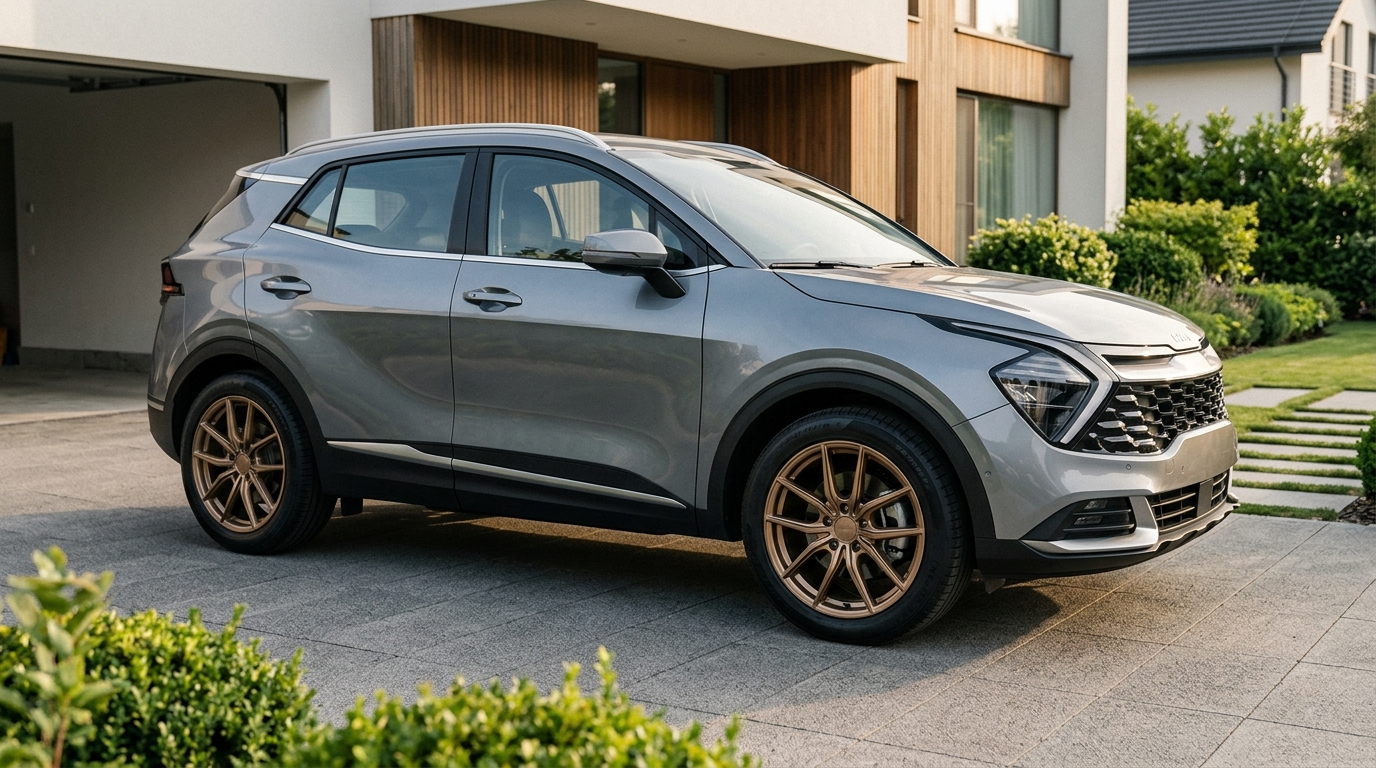
Best Aftermarket Wheels for Kia Sportage: Fitment Guide
TL;DR: For most modern Kia Sportage builds, the safest all-round aftermarket fitment is usually 18×8 to 19×8.5 with a sensible positive offset, commonly somewhere around +35 to +45 depending on generation, tyre size, brake clearance, and ride height. Most current-shape Sportage models use a 5×114.3 PCD, 67.1 mm centre bore, and M12x1.5 thread. Factory wheels typically range from 17 to 19 inches, so the smartest upgrade is usually the one that stays close to factory rolling diameter, avoids unnecessary wheel weight, and suits the Sportage’s role as a road-focused SUV rather than chasing the largest possible rim.
In This Guide
- About the Kia Sportage Platform
- Kia Sportage Fitment Specs by Generation
- Best Wheel Sizes
- Stance Options
- Suspension and Ride Height Considerations
- Choosing Wheel Construction
- Tyre Pairing Guide
- Common Fitment Mistakes
- Legal Compliance
- FAQ
- References
About the Kia Sportage Platform
The Kia Sportage sits in a category where wheel fitment looks easy from a distance but becomes more technical once you start changing real dimensions. It is an SUV with decent arch space, a taller body, and factory wheels that already look reasonably substantial on most trims. That leads many owners to assume that almost any larger aftermarket wheel will work as long as the bolt pattern matches. In practice, the Sportage responds best to measured changes rather than extremes.
That matters because the Sportage is expected to do ordinary vehicle jobs very well. It is usually a commuter, family car, long-distance cruiser, or general-purpose daily driver. Unlike a dedicated sports car, it does not hide a poor wheel choice behind stiff suspension and a narrow use case. If the wheel is too heavy, the vehicle can feel slower to respond and less settled over rough roads. If the tyre is too short, the ride becomes harsher and the proportions start to look wrong for the body. If offset is pushed too far, the problem may not appear in the driveway but show up later under full lock, heavy load, or compression.
The good news is that the Sportage generally rewards sensible wheel upgrades. It already sits on a useful factory diameter range, and most generations look noticeably better with a mild increase in width and a more confident offset. You do not need an extreme setup to improve stance. In many cases, the best-looking Sportage fitments are OEM-plus rather than aggressive.
There is also a generational shift worth noting. Earlier modern Sportage models were rounder and visually happier on conservative diameters. Later models, especially the current shape, have sharper body lines, larger arches, and a stronger ability to carry 19-inch wheels cleanly. That does not mean every Sportage should run 19s, only that the platform’s styling has changed enough that wheel proportion matters differently from one generation to the next.
If you want a solid refresher on the key measurements before choosing a wheel, start with Wheel Offset, PCD and Centre Bore Explained. If you also want a broader framework for deciding between diameter, width, weight and intended use, this aftermarket wheel buying guide is worth reading first.
Kia Sportage Fitment Specs by Generation
The Sportage has changed shape and character over the years, but the modern generations most commonly modified today follow a fairly clear pattern. Exact specifications can vary by market and trim, so always confirm your vehicle before ordering. Even so, the generations below give a practical fitment baseline for most owners.
Third Generation Kia Sportage SL
- Years: 2010 to 2016
- PCD: 5×114.3
- Centre Bore: 67.1 mm
- Stud Thread: M12x1.5
- Common Factory Wheel Sizes: 16×6.5, 17×6.5, 18×7
- Typical Factory Offset: Commonly in the +40 to +45 range
- Typical Factory Tyres: 215/70R16, 225/60R17, 235/55R18 depending on trim
- Notes: This generation responds well to moderate upgrades, but heavy wheels can make it feel more sluggish than expected.
Fourth Generation Kia Sportage QL
- Years: 2016 to 2021
- PCD: 5×114.3
- Centre Bore: 67.1 mm
- Stud Thread: M12x1.5
- Common Factory Wheel Sizes: 17×7, 18×7, and in some trims 19×7.5
- Typical Factory Offset: Usually in the low-to-mid +40s
- Typical Factory Tyres: 225/60R17, 225/55R18, 245/45R19 depending on variant
- Notes: The QL carries 18s especially well and can suit 19s if weight, tyre size, and offset are handled properly.
Fifth Generation Kia Sportage NQ5
- Years: 2021 onwards
- PCD: 5×114.3
- Centre Bore: 67.1 mm
- Stud Thread: M12x1.5
- Common Factory Wheel Sizes: 17×7, 18×7.5, 19×7.5
- Typical Factory Offset: Commonly around +45 to +51 depending on wheel package
- Typical Factory Tyres: 235/65R17, 235/60R18, 235/50R19 depending on trim
- Notes: The NQ5 has the strongest visual tolerance for larger wheels, but tyre diameter and wheel weight still matter more than many owners assume.
For most owners, the key numbers are straightforward: 5×114.3 PCD, 67.1 mm centre bore, and M12x1.5 hardware. From there, the real question is not whether a wheel bolts on, but whether the full package suits the Sportage’s balance of comfort, steering feel, clearance, and everyday use.
Best Wheel Sizes
17-inch setups
Seventeen-inch wheels remain a completely sensible choice on the Sportage, especially for owners who value comfort, sidewall support, and everyday composure. On vehicles that spend time on poor road surfaces or carry passengers and cargo regularly, a good 17-inch package can feel more natural than a larger wheel. That is not because the Sportage cannot run something bigger. It is because a medium SUV often benefits from keeping useful tyre sidewall.
A typical upgrade window here is 17×7 to 17×8 with a tyre close to factory overall diameter. On earlier SL models in particular, this size still looks proportionate and avoids the risk of the vehicle feeling overdressed for its chassis.
18-inch setups
For many Sportage owners, 18 inches is the real sweet spot. It gives the SUV a cleaner and more confident stance, fills the arches more effectively than most base factory packages, and still leaves enough sidewall for normal road use. This is often the best answer for owners who want the vehicle to look more resolved without introducing a noticeable everyday compromise.
The most successful 18-inch setups are usually 18×8 or 18×8.5 with a positive offset that keeps the wheel placed confidently without pushing too far outward. On many builds, this means something around the high +30s to mid +40s, depending on the exact tyre and generation. A Sportage on a carefully chosen 18 often ends up looking more planted than stock while keeping the ride quality that makes the platform easy to live with.
This is also the point where wheel weight becomes important. A light or sensibly weighted 18 can sharpen the car’s response. A heavy 18 can erase much of the benefit and make the Sportage feel less eager over broken surfaces.
19-inch setups
Nineteen-inch wheels can work very well on later Sportage generations because Kia already offered 19-inch factory packages on higher trims. That means the diameter itself is not unnatural for the platform. The important part is whether the rest of the wheel and tyre package remains balanced.
A common and effective range is 19×8 to 19×8.5. On the QL and especially the NQ5, this can deliver a strong visual result with a fuller wheel face and more premium road-car proportion. The risk is assuming that any 19-inch wheel will behave like the factory 19. It will not. Spoke shape affects brake clearance, actual wheel mass affects ride and steering, and tyre choice decides whether the whole package feels refined or brittle.
For a style-conscious daily-driven Sportage, a well-measured 19-inch package can be excellent. It is simply less forgiving of bad choices than an 18.
20-inch setups
Twenty-inch wheels are possible on some Sportage builds, particularly on the latest generation, but this is where fitment stops being the natural answer for most owners. The tyre sidewall becomes noticeably shorter, wheel weight needs close attention, and the vehicle starts to give away some of the calmness that makes it a good road SUV. That does not mean 20s are impossible. It means they are usually an aesthetic decision rather than the best all-round engineering choice.
For most people, the stronger answer is a good 18 or 19 rather than a 20 that looks impressive parked but asks the suspension and tyres to cover for an oversized wheel.
Best all-round recommendation
If I had to give one broad answer for most Kia Sportage owners, it would be this: 18×8 to 19×8.5 with a sensible positive offset and a tyre close to factory rolling diameter is the strongest all-round fitment window. It improves stance, keeps the vehicle practical, and avoids many of the unnecessary trade-offs that appear once diameter or offset becomes excessive.
Stance Options
OEM-plus touring fitment
This is the fitment style that suits the Sportage best. Think moderate width, a mildly more assertive offset than stock, and a tyre with enough sidewall to preserve comfort and stability. Visually, the car looks better planted and less tucked in, but it still makes sense as a daily-driven SUV.
- Pros: Low rubbing risk, good ride quality, strong long-distance usability, easy tyre choice
- Cons: Less dramatic than an aggressive street setup
For most owners, this is the setup that ages best because it respects the purpose of the platform.
Flush street fitment
A flush setup pushes the wheel outward enough to fill the arches more confidently. On the Sportage, this often makes a big visual difference because many factory wheels sit conservatively. A measured 18×8.5 or 19×8.5 with the right offset can give the SUV a fuller, stronger stance without looking exaggerated.
- Pros: Better arch fill, stronger side profile, more custom look without going extreme
- Cons: Smaller clearance margin once tyre choice, passengers, or lowered ride height enter the picture
The key here is restraint. Flush should mean deliberately placed, not obviously poking past the body line.
Aggressive static fitment
A more aggressive build usually combines larger diameter, more width, lower offset, and sometimes a reduced ride height. The current-shape Sportage can wear this visually better than earlier generations, but the practical compromises rise quickly. Clearance becomes sensitive, the ride can get brittle, and tyre wear may increase if alignment needs to be pushed to make the package fit.
- Pros: Maximum visual impact, fuller face, more distinctive custom stance
- Cons: Higher rubbing risk, less comfort, tighter compliance margin, reduced practicality
For most road-driven Sportages, this is a style-led choice rather than the fitment sweet spot.
Suspension and Ride Height Considerations
Suspension changes matter more on the Sportage than many people expect. Because it starts with SUV ride height and more wheel gap than a hatchback or sedan, owners often assume that lowering or changing wheel size leaves plenty of room. In reality, the available clearance changes quickly once the vehicle moves through steering lock and full compression.
Mild lowering can improve the visual proportion of the Sportage, especially on 18- or 19-inch wheels, but it also narrows the fitment window. A wheel that seems comfortably clear at stock height may become marginal at the front liner, outer guard, or inner suspension once the vehicle is lowered and driven properly. This is why wheel spec and ride height should be planned together rather than treated as separate decisions.
Alignment is also part of the fitment picture. A small amount of extra negative camber can sometimes help a wider wheel sit more neatly under the arch, but excessive camber on a daily SUV is usually a sign that the wheel choice is asking too much from the car. Toe settings matter as well. If they are off, the Sportage can feel less settled at speed and tyre wear will often become the first warning sign.
Load conditions deserve more attention than they usually get. A Sportage may be used with passengers, luggage, child seats, shopping, or travel gear. That means the suspension will see a wider range of compression than many lower passenger cars. A setup that clears when the car is empty may not remain trouble-free under normal family use. Final fitment checks should always include full lock and realistic compression, not just a quick parked inspection.
Choosing Wheel Construction
Wheel construction matters on the Sportage because SUVs are especially sensitive to unnecessary wheel mass. A wheel that is too heavy does not just affect acceleration. It also changes how the suspension reacts, how the steering feels, and how controlled the vehicle remains over broken surfaces.
Cast wheels
Cast wheels are common and can be perfectly sensible on a daily-driven Sportage if you choose carefully. The main mistake is assuming that all cast wheels are similar. They are not. Some are reasonably light for their size, while others are much heavier than they need to be. On a medium SUV, that extra mass is noticeable.
If you are considering a cast wheel, ask for actual weight rather than guessing from appearance alone. A simple well-designed cast wheel can be a better technical choice than a visually dramatic design that adds needless bulk at each corner.
Flow formed wheels
Flow formed or flow forged wheels often make excellent sense on the Sportage. They usually offer a worthwhile reduction in weight compared with many conventional cast options while remaining more accessible than a fully forged wheel. That balance suits the platform well, especially in 18- and 19-inch sizes where controlling weight matters more.
For many road cars, this construction type is where the best balance of performance, strength, and cost sits.
Forged wheels
Forged wheels are the premium option and make the most sense when minimum weight, strong material properties, or a very specific custom fitment is the goal. On a Sportage, they are more about refinement and build quality than necessity. Most owners do not need them, but they can make sense if you want the cleanest driving outcome from a larger wheel.
If you want the broader background, this guide on cast vs forged wheels explains the differences clearly.
Tyre Pairing Guide
Tyres define the finished result as much as the wheels do. On the Sportage, they affect comfort, steering response, wet-weather confidence, noise, impact harshness, and load support. That makes tyre choice just as important as the wheel spec itself.
For many Sportage fitments, tyre widths in the 225 to 245 range are the most relevant depending on generation and wheel width. A 225-width tyre often suits more conservative 17- and 18-inch setups well. A 235-width tyre is commonly a strong all-round answer on later generations, especially when matching factory proportions. A 245 can work on suitable 18- or 19-inch widths when the platform and tyre model support it, but it should be treated as a measured fitment, not an automatic upgrade.
The most important principle is to stay close to the original rolling diameter. That helps preserve gearing, speedometer behaviour, stability system calibration, and ride quality. It also keeps the visual balance right. One of the easiest ways to make an SUV wheel package feel wrong is to run a tyre that leaves too little sidewall for the size of the body.
Street-focused tyre approach
- 225-width tyres: Usually a safe all-round choice for conservative 17- and 18-inch setups.
- 235-width tyres: Often the best middle ground on modern Sportage builds because they preserve a strong footprint without making clearance too difficult.
- 245-width tyres: Possible on suitable wheel widths and later generations, but shoulder shape and actual measured width matter.
- Touring and touring-performance tyres: Usually the best match for the Sportage’s road-focused role because they preserve comfort and stability.
- Sportier tyres: Can sharpen response, but they also tend to expose marginal clearance and ride more firmly.
Should you run a staggered setup?
In almost every case, no. The Sportage works best with a square setup. Matching front and rear widths keeps tyre rotation simple, preserves predictable handling, and avoids adding cost without much real benefit. A staggered arrangement makes more sense on platforms designed around rear-driven performance priorities than it does on a road SUV like this.
If you want the broader reasoning, this guide to staggered wheel setups is useful background reading.
Common Fitment Mistakes
- Choosing diameter for appearance alone: The Sportage can wear a larger wheel visually, but that does not make the largest option the best one.
- Ignoring wheel weight: A heavy wheel can quietly make the SUV feel duller, harsher, and less composed.
- Assuming all tyres of the same labelled size fit the same: Real width and shoulder shape vary significantly between tyre models.
- Watching only the outer fitment: Inner clearance to strut, liner, and brake components matters just as much.
- Stacking too many changes at once: Larger diameter, wider wheel, lower offset, and lower ride height together are what usually create trouble.
- Planning with the vehicle empty only: SUVs often run with passengers or cargo, which changes available clearance.
- Using tyres that are too short overall: This usually hurts comfort and makes the wheel look visually oversized.
- Skipping proper hub support and hardware: Correct centre bore support, nut seat type, and installation detail still matter.
- Assuming factory 19-inch availability means every aftermarket 19 will fit the same: Spoke design, barrel shape, and real wheel mass still matter.
Legal Compliance
Wheel and tyre rules vary by region, so there is no single universal upgrade that is automatically acceptable everywhere. The safest approach is to keep overall rolling diameter reasonably close to factory, use tyres with appropriate load and speed ratings for the vehicle, and ensure the full wheel-and-tyre package clears bodywork, suspension, and brake components throughout the full range of steering and suspension movement.
Tyres should remain properly covered by the bodywork when viewed from above, and any changes to wheel width, offset, track width, or ride height should be checked against the inspection and roadworthiness standards that apply where the vehicle is registered. A setup that bolts on physically is not automatically compliant or sensible.
It is also worth being careful with excessive poke, stretched tyres, or major diameter changes. Those choices can create mechanical downsides, inspection problems, or both. On a practical SUV like the Sportage, conservative and well-measured fitment is usually the smarter answer.
FAQ
What bolt pattern does the Kia Sportage use?
Most modern Kia Sportage generations commonly use a 5×114.3 bolt pattern. It is still worth confirming your exact model and trim before ordering wheels.
What is the centre bore on the Kia Sportage?
The modern Kia Sportage commonly uses a 67.1 mm centre bore. If an aftermarket wheel has a larger bore, the correct hub-centric rings should be used.
What is the best all-round wheel size for a Kia Sportage?
For most owners, 18×8 to 19×8.5 is the strongest all-round fitment window. That range usually improves stance while preserving daily comfort and sensible tyre choice.
Will 18×8.5 fit on a Kia Sportage?
Usually yes, and it is often an excellent upgrade size, but offset, tyre model, ride height, and brake clearance still matter. It should be treated as a measured fitment rather than an automatic one.
Can I run 19-inch wheels on a Sportage?
Yes, especially on later generations that already offered factory 19-inch packages. The key is to keep wheel weight sensible and choose a tyre size close to the original rolling diameter.
Are 20-inch wheels a good idea on a Kia Sportage?
They can work visually, particularly on the latest generation, but they are usually a style-led choice rather than the best all-round setup. Most owners will find 18s or 19s easier to live with.
What tyre width works best on the Kia Sportage?
For many builds, 225 or 235 width works best depending on generation and wheel width. A 245-width tyre can also work on suitable packages, but real tyre shape and clearance should be checked carefully.
Should I stagger the wheel sizes on a Kia Sportage?
Generally no. A square setup is usually the smarter choice for handling consistency, tyre rotation, and fitment simplicity.
Does lowering affect wheel fitment much on the Sportage?
Yes. Lowering reduces clearance under compression and can make the front liner, inner clearance, and outer guard more sensitive to tyre width and offset.
Are lighter wheels worth it on a Sportage?
Yes. A lighter wheel can help preserve steering response, suspension composure, and ride quality, especially when stepping up to a larger diameter.
References
- Wheel-Size Kia Sportage fitment index
- Wheel-Size 2010 Kia Sportage reference page
- Wheel-Size 2021 Kia Sportage reference page
- Kia owner and fitment documentation for generation-specific factory wheel and tyre packages


