
Best Aftermarket Wheels for Mazda 6: Fitment Guide
TL;DR: For most Mazda 6 builds, the safest all-round aftermarket fitment sits around 18×8 to 18×8.5 with offsets in the high +30s to mid +40s, depending on generation, tyre choice, and ride height. Most Mazda 6 models use a 5×114.3 PCD and 67.1 mm centre bore, with factory wheels generally sitting in the 16 to 19 inch range and relatively conservative positive offsets. If you want a clean street setup, stay close to 225/45R18 or 235/40R19 overall diameter. If you want a more aggressive stance, measure carefully, because the Mazda 6 has less spare guard room than many owners expect once it is lowered.
In This Guide
- About the Mazda 6 Platform
- Mazda 6 Fitment Specs by Generation
- Best Wheel Sizes
- Stance Options
- Suspension & Lowering
- Choosing Wheel Construction
- Tyre Pairing Guide
- Common Fitment Mistakes
- Legal Compliance
- FAQ
- References
About the Mazda 6 Platform
The Mazda 6 has always been one of the more balanced choices in the midsize segment for people who actually care how a car feels. It is practical, refined enough for everyday use, and usually more willing to turn and settle into a corner than the average family sedan or wagon. That matters for wheel fitment, because the Mazda 6 responds best to changes that respect the chassis rather than overpower it.
Across its generations, the formula stayed fairly consistent. The car uses a front-engine, front-wheel-drive layout in most versions, with a suspension package designed to give a sharper steering response than many direct rivals. It is not a fragile platform, but it is sensitive enough that poor wheel choices can make it feel heavier, less settled, and less precise. If you go too big, too heavy, or too aggressive with offset, the car starts to lose the composure that makes it appealing in the first place.
That is why a good Mazda 6 wheel setup is not just about filling the guards. You need to think about steering effort, scrub radius, tyre sidewall support, brake clearance, and the amount of suspension travel the car still has left once it is lowered. A setup that looks dramatic on paper can introduce tramlining, rubbing, harshness, and unnecessary wear if the rest of the package has not been thought through.
The good news is that the Mazda 6 gives you plenty to work with. Factory wheel sizes are modest enough that an aftermarket upgrade can improve stance and tyre support without needing extreme specs. Most owners do best with a square setup, sensible width, and a tyre that stays close to factory rolling diameter. That approach keeps the car usable, keeps the steering honest, and avoids turning a practical daily into something fussy.
There is also a wide difference between what technically bolts on and what actually works well. A wheel may clear the hub and brake package while still creating problems at the guard, inner liner, or strut side. The Mazda 6 especially rewards measured changes. A few millimetres in width or offset can be the difference between a tidy, well-resolved fitment and one that rubs on compression or feels nervous over rough roads.
If you want a refresher on the core terms before picking sizes, read Wheel Offset, PCD and Centre Bore Explained. If you are still comparing wheel types and trade-offs more broadly, this aftermarket wheel buying guide is a useful starting point.
Mazda 6 Fitment Specs by Generation
The Mazda 6 spans multiple generations and body styles, so factory wheel diameter and tyre size vary, but the underlying fitment pattern stays fairly consistent. The main points to confirm are generation, brake package, ride height, and whether the car is running factory or aftermarket suspension.
First Generation Mazda 6 GG/GY
- Years: 2002 to 2008
- PCD: 5×114.3
- Centre Bore: 67.1 mm
- Common Factory Wheel Sizes: 16×6.5, 17×7
- Typical Factory Offset: Around +50 to +55
- Notes: Earlier cars are usually more forgiving with 17 and 18 inch upgrades, but condition matters. Worn bushes, tired dampers, and sagging springs can make a theoretically safe fitment behave worse in the real world.
Second Generation Mazda 6 GH
- Years: 2007 to 2012
- PCD: 5×114.3
- Centre Bore: 67.1 mm
- Common Factory Wheel Sizes: 17×7, 18×7.5
- Typical Factory Offset: Usually in the mid +50 range
- Notes: The GH has a slightly more substantial body than the first generation and often suits an 18-inch package very naturally. It still does not need an oversized or especially heavy wheel to look right.
Third Generation Mazda 6 GJ/GL
- Years: 2012 onwards, including later facelift models
- PCD: 5×114.3
- Centre Bore: 67.1 mm
- Common Factory Wheel Sizes: 17×7.5, 19×7.5
- Typical Factory Offset: Commonly around +45 to +50, depending on trim
- Notes: This generation often leaves the factory with a stronger visual stance already, especially on 19-inch trims. That means aftermarket fitment usually works best when it sharpens the proportions rather than trying to reinvent them.
In practical terms, most Mazda 6 owners can treat 5×114.3 and 67.1 mm as the key hub numbers, then build outward from there. The bigger variable is not bolt pattern but how far you move away from factory width and offset. Go a little wider with a sensible tyre, and the car often improves. Go too aggressive, and you start creating issues that do not add much outside of parked-car appearance.
Brake clearance can also vary more than owners expect. Diameter matters, but spoke design matters just as much. Two 18×8.5 wheels with the same offset can have completely different caliper clearance depending on spoke curvature, pad design, and inner barrel profile. That is one reason why published wheel size alone should never be treated as the whole story.
Best Wheel Sizes
17-inch setups
A 17-inch wheel is still a very sensible choice on the Mazda 6, especially on first and second generation cars or on later cars used primarily as daily drivers. It keeps sidewall height in a healthy range, usually improves ride quality over rough surfaces, and makes it easier to avoid rubbing when the suspension compresses.
For most conservative builds, 17×7.5 or 17×8 works well. Tyres around 215/50R17 or 225/50R17 are common reference points, depending on what the car came with originally. This type of setup suits owners who want a cleaner wheel design, slightly better tyre support, and a mild visual upgrade without making the car feel harsher or heavier.
The 17-inch route is also the easiest place to keep the car honest dynamically. Steering stays predictable, tyre pricing is usually reasonable, and there is less temptation to use a very low-profile tyre just for visual effect. On a platform like the Mazda 6, that is often a better trade than chasing sheer diameter.
18-inch setups
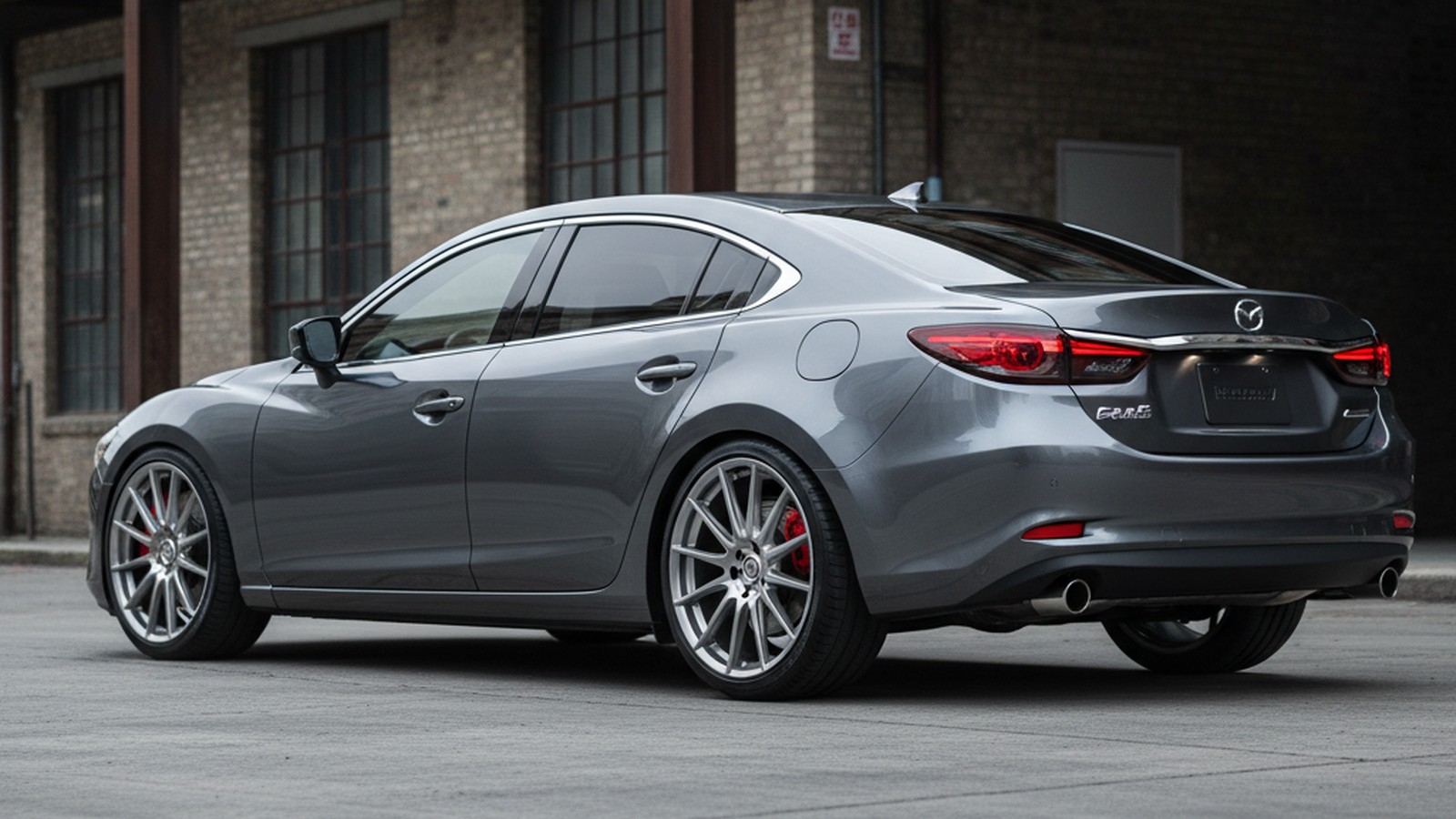
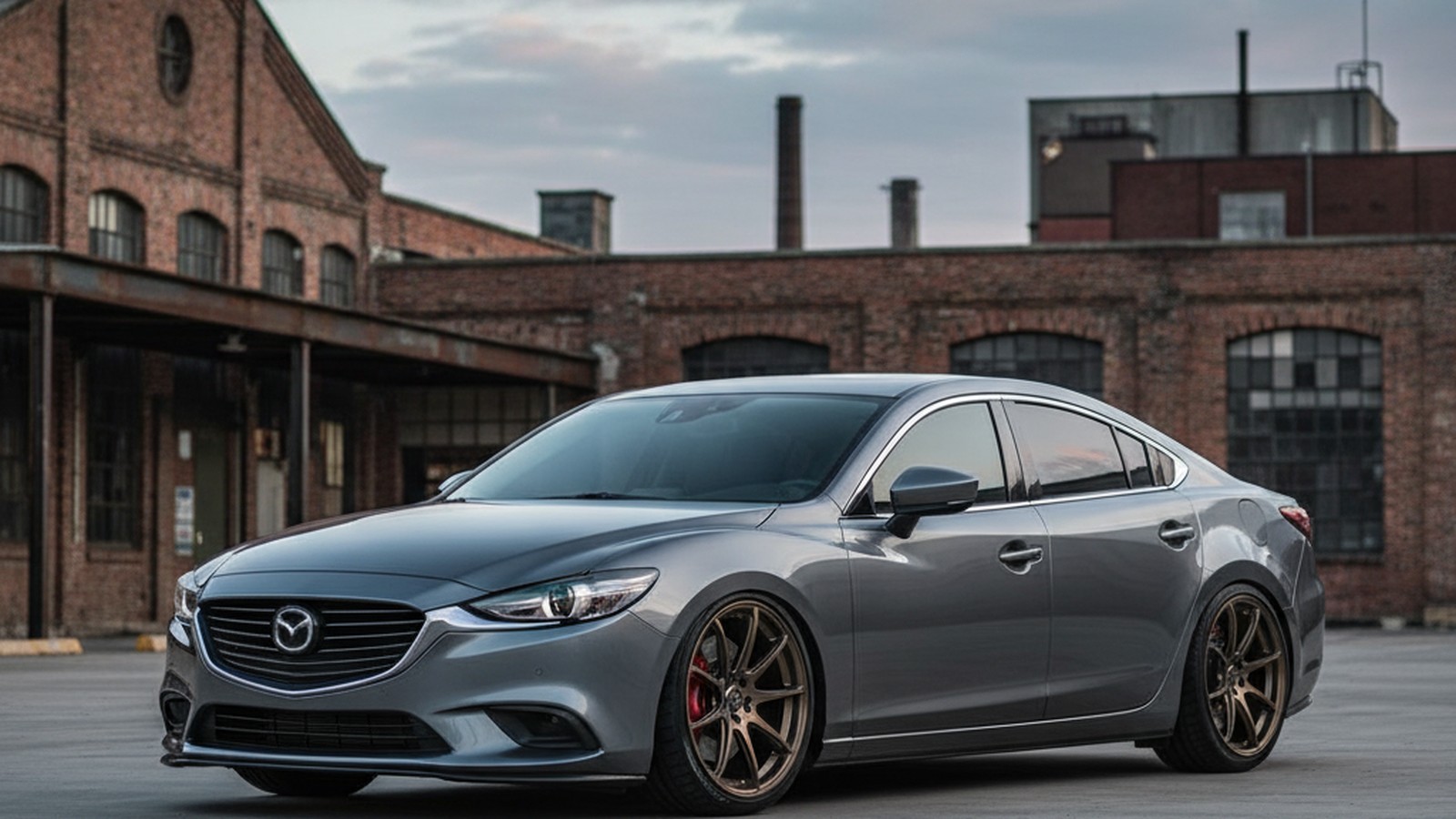
For most Mazda 6 owners, 18 inches is the sweet spot. It gives the car enough visual presence to look properly upgraded, while still preserving enough sidewall to ride and handle well on normal roads. It also tends to offer the best balance between aesthetics, tyre support, brake clearance, and real-world usability.
The most dependable fitments usually fall around 18×8 or 18×8.5. Offsets in the high +30s to mid +40s are often where the best results live, though the exact number depends on generation, tyre brand, and whether the car is lowered. Tyres such as 225/45R18 are a natural all-round choice. On 18×8.5, a 235/40R18 can work well when you want a slightly broader footprint and a stronger filled-out look.
This is the size range that tends to make the Mazda 6 feel more planted without becoming clumsy. You gain a clearer stance and stronger sidewall support, but you do not ask the chassis to deal with an unnecessarily heavy wheel or ultra-short tyre. If someone wants one answer that works for the broadest range of Mazda 6 builds, 18×8.5 is usually it.
19-inch setups
Nineteen-inch wheels can work very well on the third generation Mazda 6 because the body shape is long, clean, and naturally suits a larger wheel visually. They can also work on earlier cars if the build is deliberately style-led. The catch is that 19-inch fitment leaves less room for error. Tyre choice becomes more critical, and wheel weight matters more than ever.
A sensible 19-inch setup is often 19×8 or 19×8.5 with a tyre such as 225/40R19 or 235/35R19, again depending on what rolling diameter best matches the car. This can look excellent when the suspension is well sorted. Done badly, it can make the car ride sharply, crash over rough surfaces, and feel less composed in the middle of a corner.
That is why 19s are best treated as a deliberate choice rather than an automatic upgrade. They suit owners who want the extra presence and are willing to be more selective about wheel construction, tyre quality, and final alignment.
Best all-round recommendation
If I had to narrow it to one broadly safe answer, it would be this: most Mazda 6s are happiest on an 18×8 or 18×8.5 wheel with a sensible positive offset and a tyre that stays close to factory overall diameter. That gives you enough width to improve support and stance, enough sidewall to preserve ride quality, and enough flexibility to work across different generations without heading straight into clearance headaches.
Stance Options
OEM-plus street fitment
This is the fitment style that suits the Mazda 6 best in everyday use. Think moderate width, sensible offset, no exaggerated stretch, and a ride height that still leaves the suspension room to work. The result is cleaner and more resolved than stock, but still feels like a properly engineered road car rather than a compromised show build.
- Pros: Low rubbing risk, predictable handling, comfortable ride, strong daily usability
- Cons: Less dramatic than a more aggressive flush setup
For a practical car like the Mazda 6, OEM-plus usually ages better. It looks intentional, drives properly, and does not punish you every time the road surface gets rough.
Flush street fitment
Flush fitment pushes the wheel closer to the outer edge of the guard for a more assertive stance. On the Mazda 6, this can look very good, especially on 18s or conservative 19s, but it needs discipline. Once the wheel sits further out, tyre shoulder shape, alignment, and compression travel matter much more.
- Pros: Stronger stance, fuller arch presence, more aggressive visual balance
- Cons: Higher rubbing risk, more sensitivity to ride height and tyre choice
The mistake here is assuming flush means extreme. On a Mazda 6, a few millimetres is often enough. Chase too much poke and the car starts to look forced rather than clean.
Aggressive static or show fitment
A more aggressive static build usually means lower ride height, wider wheels, lower effective offsets, and sometimes extra negative camber to control the outer edge. It can work if the goal is mainly visual, but the trade-offs arrive quickly. Inner-edge tyre wear goes up, road manners can become brittle, and rubbing on passengers or larger bumps becomes more likely.
- Pros: Maximum visual impact, stronger wheel presence, show-oriented stance
- Cons: Reduced practicality, more tyre wear, harsher ride, tighter clearance margins
The Mazda 6 is not a platform with endless guard room, so this kind of build rewards careful measuring rather than guesswork.
Suspension & Lowering
Lowering changes everything about wheel fitment. A wheel and tyre package that clears comfortably at factory height may become marginal the moment you reduce bump travel and bring the tyre closer to the guard. This is especially true at the front, where steering lock and compression combine to expose any weak assumptions in the setup.
Mild lowering springs usually pair best with conservative wheel specs. If the goal is simply to reduce wheel gap and sharpen the appearance, a moderate drop on a sensible 18-inch package often gives the cleanest result with the fewest side effects. That is usually the easy path.
Once the car goes lower than that, coilovers become the better answer because they let you tune the ride height around the wheel package instead of forcing the wheels to adapt to a fixed drop. Good coilovers also tend to preserve body control and travel better than a cheap spring-only solution. On a car like the Mazda 6, that matters. The chassis is good enough to reveal the difference between a setup that has been engineered and one that has just been lowered for appearance.
Alignment is another major piece of the puzzle. A little extra negative camber can help a wider or more aggressive wheel sit cleanly under the guard while improving cornering support. Too much, and you trade away tyre life for appearance. Toe settings matter as well. A setup that feels lively in photos can feel nervous and tiring on real roads if the alignment is not sensible.
It is also worth remembering that real clearance is dynamic, not static. You are not fitting wheels for the car parked on level ground. You are fitting them for the car under braking, turning into a driveway, crossing a crest, or hitting a mid-corner bump with passengers in the cabin. That is why the final check should always include full lock and full compression, not just a quick glance in the driveway.
Choosing Wheel Construction
Construction matters more than a lot of owners think. The Mazda 6 is not as weight-sensitive as a tiny roadster, but it is still responsive enough that a heavy wheel can blunt the steering and make the suspension feel less settled over rough roads. If you choose a bigger diameter, wheel weight becomes even more important.
Cast wheels
Cast wheels are common, accessible, and often perfectly fine for normal road use. The trick is to avoid treating all cast wheels as equal. Some are reasonably light and well suited to daily driving. Others are simply heavy for their size, and the extra mass shows up in steering response, braking feel, and ride composure.
If you are buying cast wheels for a Mazda 6, ask for actual weight. A wheel that fits well and stays reasonably light is usually a smarter choice than a heavier one with a more dramatic design.
Flow forged wheels
Flow forged construction often makes a lot of sense on this platform. It tends to offer a useful reduction in weight over many cast options while maintaining good strength and more approachable pricing than a full forged wheel. For a road car that still gets driven with intent, that is a very attractive middle ground.
On an 18 or 19-inch Mazda 6 setup, that weight saving is not just theoretical. It can help the car feel cleaner over broken surfaces and slightly more willing on turn-in, especially if you are replacing a heavy factory wheel or a particularly bulky aftermarket one.
Fully forged wheels
Fully forged wheels are the premium option and make the most sense when low weight, high strength, or a very specific custom fitment is the goal. For a serious enthusiast build, they are excellent. For an ordinary daily-driven Mazda 6, they are usually more about refinement and quality than necessity.
Whatever the construction, fitment still comes first. The lightest wheel in the world is not useful if the width, offset, spoke design, or tyre pairing is wrong. For a deeper explanation, read this guide on cast vs forged wheels.
Tyre Pairing Guide
Tyres shape the outcome just as much as the wheels themselves. The Mazda 6 responds well to a tyre that supports the wheel properly without turning the ride harsh or the steering dull. Sidewall shape, tread pattern, and actual measured width all matter. Two tyres with the same labelled size can behave quite differently in the real world.
For 17-inch setups, 215 and 225 section widths are common depending on the wheel width and factory baseline. For 18-inch setups, 225/45R18 is often the default safe option, while 235/40R18 is a common step for 18×8.5 when you want slightly stronger sidewall support and a fuller stance. For 19-inch wheels, 225/40R19 and 235/35R19 are typical starting points if they keep rolling diameter appropriate for the specific car.
The main goal is to avoid mismatch. A tyre that is too narrow for the wheel can create unnecessary stretch, reducing sidewall support and sometimes worsening rim protection. A tyre that runs unusually wide or square for its labelled size can create rubbing even when the wheel spec itself looked sensible on paper.
Street tyre approach
- 225-width tyres: Usually the sweet spot for all-round road use on 17×8 or 18×8, with a good mix of steering response, comfort, and predictable behaviour.
- 235-width tyres: Better suited to 18×8.5 or carefully chosen 19×8.5 setups where extra support is wanted and clearance has been checked properly.
- Comfort-biased performance tyres: A good match for daily-driven cars where wet grip, refinement, and progressive response matter more than ultimate sharpness.
- Sharper performance tyres: Better for drivers who want more immediate steering and dry grip, but they can expose a poor alignment or marginal clearance more quickly.
Should you go staggered?
In almost every case, no. The Mazda 6 works best with a square setup. It is front-wheel drive in most forms, and running wider rear wheels usually adds cost and complexity without adding meaningful balance. Tyre rotation becomes less flexible and the car does not suddenly become better because the rear wheels are wider.
If you want the background on why square fitment is usually the right answer, this staggered wheel setup guide is worth reading.
Common Fitment Mistakes
- Choosing diameter before deciding the car’s purpose: An 18-inch package may be the best answer even if a 19-inch wheel looks more impressive in a listing.
- Ignoring wheel weight: A large, heavy wheel can make the car feel slower and less settled, especially on rougher roads.
- Assuming all 225 or 235 tyres measure the same: Real tyre width and shoulder shape vary a lot by brand and model.
- Using offset alone to predict clearance: Spoke design, barrel profile, tyre construction, and suspension height all matter too.
- Lowering first and solving fitment later: On the Mazda 6, suspension and wheel choice need to be planned together.
- Overdoing poke for a flush look: The line between tidy and troublesome is often only a few millimetres.
- Not checking full lock and compression: Parked-car clearance tells only part of the story.
- Using low-quality hub rings or incorrect hardware: Proper centring and the right seat type for nuts or bolts are basic but important details.
Legal Compliance
Any wheel and tyre package should remain consistent with normal roadworthiness principles. The tyres should have appropriate load and speed ratings for the vehicle, and the overall rolling diameter should stay reasonably close to the factory specification so speedometer behaviour, gearing, and electronic systems remain within a normal operating window.
The tyre should also remain properly covered by the bodywork when viewed from above, and the wheel and tyre package must not contact guards, liners, suspension components, or brake hardware through the full range of steering and suspension movement. A fitment that only clears at static ride height is not genuinely road-usable.
Suspension changes, track width increases, exposed tread, and aggressive tyre stretch may all fall foul of inspection or modification rules depending on where the car is driven. Before committing to a very low or very aggressive package, it is worth confirming what is acceptable under the applicable inspection and registration requirements in your area.
FAQ
What bolt pattern does the Mazda 6 use?
Most Mazda 6 models use a 5×114.3 bolt pattern. That is the key starting point when narrowing down aftermarket wheel options.
What is the Mazda 6 centre bore?
The Mazda 6 commonly uses a 67.1 mm centre bore. If the aftermarket wheel has a larger bore, you should use the correct hub-centric rings.
What is the best all-round wheel size for a Mazda 6?
For most owners, 18×8 or 18×8.5 is the best all-round choice. It balances appearance, tyre support, ride quality, and practical clearance better than more extreme sizes.
Can I run 19-inch wheels on a Mazda 6?
Yes, especially on later third generation cars, but the result depends heavily on wheel weight, tyre choice, and suspension condition. Nineteens can look excellent, but they leave less room for error than 18s.
Will 18×8.5 fit a Mazda 6?
Usually yes, and it is one of the most sensible upgrade sizes on the platform. The exact offset and tyre choice still matter, especially if the car is lowered.
What tyre size works best with 18×8 or 18×8.5?
225/45R18 is a common all-round starting point, while 235/40R18 is a common step for 18×8.5 when you want a slightly fuller and more performance-oriented fitment.
Should I stagger wheels on a Mazda 6?
Generally no. A square setup is usually the smartest option for fitment simplicity, tyre rotation, and predictable handling balance.
Do I need to roll guards on a Mazda 6?
Not for most sensible street fitments. Guard work tends to become relevant only once you combine aggressive width or offset with lowering and a bulkier tyre shape.
Does lowering affect wheel fitment a lot on the Mazda 6?
Yes. Lowering reduces bump travel and can bring the tyre much closer to the guard and inner liner, especially at the front during steering and compression.
Are lighter wheels worth it on a Mazda 6?
Yes, especially if you are moving up in diameter. A lighter wheel usually helps steering response, ride quality, and overall refinement compared with a heavier wheel of the same size.
References
- Wheel-Size.com Mazda Mazda6 fitment index
- Wheel-Size.com 2003 Mazda Mazda6 fitment reference
- Wheel-Size.com 2008 Mazda Mazda6 fitment reference
- Wheel-Size.com 2013 Mazda Mazda6 fitment reference
- Kaizen Wheels: Wheel Offset, PCD and Centre Bore Explained
- Kaizen Wheels: Aftermarket Wheel Buying Guide
- Kaizen Wheels: Cast vs Forged Wheels
- Kaizen Wheels: Staggered Wheel Setup Explained
PHP: 2026-04-20 00:48:43 [notice X 0][/home/mensring/kaizenwheels.com.au/wp-content/plugins/elementor-pro/modules/forms/submissions/actions/save-to-database.php::193] {closure:ElementorProModulesFormsSubmissionsActionsSave_To_Database::__construct():193}(): Implicitly marking parameter $exception as nullable is deprecated, the explicit nullable type must be used instead [array (
‘trace’ => ‘
#0: ElementorCoreLoggerManager -> shutdown()
‘,
)]
PHP: 2026-04-20 00:48:47 [notice X 0][/home/mensring/kaizenwheels.com.au/wp-content/plugins/elementor-pro/modules/forms/submissions/actions/save-to-database.php::193] {closure:ElementorProModulesFormsSubmissionsActionsSave_To_Database::__construct():193}(): Implicitly marking parameter $exception as nullable is deprecated, the explicit nullable type must be used instead [array (
‘trace’ => ‘
#0: ElementorCoreLoggerManager -> shutdown()
‘,
)]


