
Best Aftermarket Wheels for Subaru WRX and STI: Fitment Guide
TL;DR
The best wheels for WRX STI models are 18×9.5 aftermarket alloys with +38 to +45 offset and a 5×114.3 bolt pattern. Upgrading from stock reduces unsprung weight, sharpens steering response, and transforms the car’s stance. This guide covers exact fitment specs, recommended Kaizen designs, and everything you need to bolt on with confidence.
In This Guide
Why Upgrade Your WRX or STI Wheels?
Upgrading to quality aftermarket wheels is one of the most effective modifications for the Subaru WRX and STI. Replacing the factory alloys with lighter, wider options reduces unsprung mass, sharpens steering response, and gives the iconic rally-bred platform the aggressive stance it deserves.
The WRX and STI have been pillars of the Australian performance car scene for over two decades. According to Subaru’s engineering data, the GR-generation STI’s factory wheels weigh approximately 11.5 kg each. A well-chosen aftermarket wheel in the same 18-inch diameter can weigh 8.5-9.5 kg — a saving of 2-3 kg per corner that directly improves acceleration, braking, and turn-in feel.
Beyond performance, aftermarket wheels let you dial in exactly the right width and offset for your suspension setup. The right wheel offset and PCD combination ensures clean fitment without rubbing or spacer workarounds.
WRX and STI Fitment Specs: Bolt Pattern, Offset and Sizing
Every WRX and STI from 2001 onward shares the 5×114.3 bolt pattern with a 56.1 mm centre bore. This smaller-than-average centre bore means hub-centric rings are essential when running multi-fit aftermarket wheels.
Factory specifications by generation:
| Generation | Years | Factory Size | Bolt Pattern | Stock Offset |
|---|---|---|---|---|
| GD (WRX/STI) | 2001-2007 | 17×7 / 17×8 | 5×114.3 | +48 / +53 |
| GR/GV (WRX/STI) | 2008-2014 | 17×8 / 18×8.5 | 5×114.3 | +55 |
| VA (WRX/STI) | 2015-2021 | 17×8 / 18×8.5 | 5×114.3 | +55 |
| VB (WRX) | 2022-present | 18×8.5 | 5×114.3 | +55 |
Note: The earliest GC/GF WRX (1994-2000) used a 5×100 bolt pattern. Confirm your bolt pattern before ordering if you own a first-gen model. For a deeper explanation of bolt patterns, see our wheel hardware and fitment essentials guide.
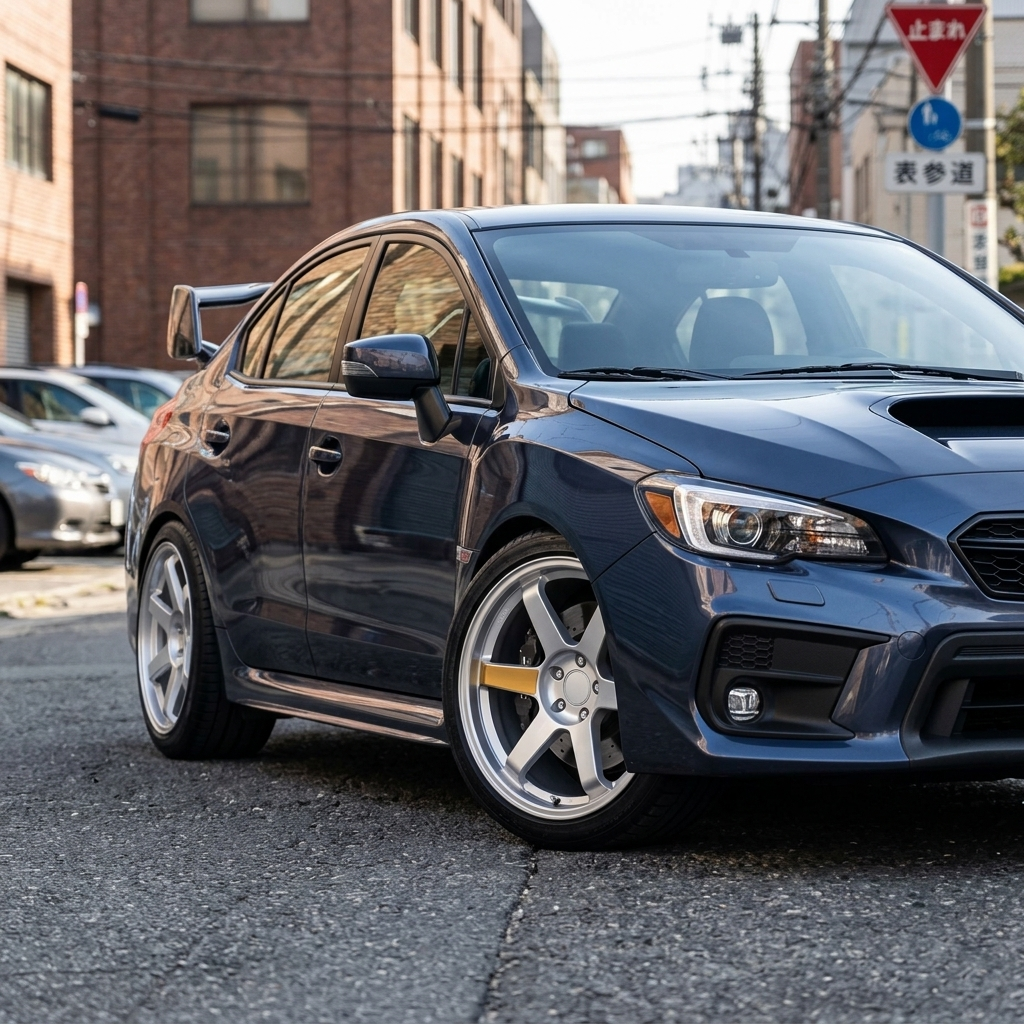
Best Wheel Sizes for the WRX and STI
For most WRX and STI owners, 18×9.5 with an offset between +38 and +45 is the sweet spot. This fills the factory arches without aggressive modification and provides enough width for a 255 or 265 tyre.
Daily Driving and Street Use
- Size: 18×8.5 to 18×9.5, offset +40 to +48
- Tyres: 245/40R18 to 255/35R18
- Stays close to factory specs while improving aesthetics and grip
Track Days and Performance Driving
- Size: 18×9.5, offset +38 to +42
- Tyres: 265/35R18
- Maximises contact patch; lightweight construction is critical to reduce rotational inertia
Show and Stance Builds
- Size: 18×9.5 to 18×10.5, offset +22 to +38
- Tyres: 255/35R18 to 275/35R18
- May require guard rolling or coilover adjustment for clearance
While 19-inch wheels are possible, the added unsprung weight and thinner sidewalls reduce compliance on Australia’s variable road surfaces. For most owners, 18 inches is the performance-optimal size. Our wheel size guide explains the diameter-performance relationship in detail.
Choosing the Right Wheel Construction for Your WRX
Wheel construction directly impacts weight, strength, and cost – three factors that matter enormously for a performance car like the WRX or STI.
Gravity cast wheels pour molten aluminium into a mould. They’re the most affordable option, perfectly adequate for daily driving. Expect 10-12 kg in an 18×9.5 size. Kaizen’s cast range starts at $1,199 per wheel.
Flow forged (rotary forged) wheels start with a cast centre, then spin the barrel under heat and pressure to align the grain structure. The result is 15-20% lighter than pure casting according to the Japan Aluminium Association’s testing standards – a popular middle ground for WRX owners wanting weight savings without full forging costs.
Fully forged wheels are machined from a single billet compressed under up to 10,000 tonnes of pressure. An 18×9.5 forged wheel can weigh just 7.5-8.5 kg – the gold standard for serious track use. Kaizen offers forged construction across all eight wheel designs.
Top Kaizen Wheel Designs for the WRX and STI
Kaizen’s eight-design range includes several options that pair exceptionally well with the WRX and STI’s aggressive bodywork and rally heritage.
Kaizen 001 – The JDM Motorsport Classic
Six broad, flat spokes with crisp triangular windows echoing the golden era of Japanese motorsport. The open spoke design provides excellent brake cooling for cars running STI Brembo calipers. Available in matte gunmetal or custom colours at $1,499 per wheel.
Kaizen 007 – Function-First Motorsport
Ten disciplined, evenly spaced spokes with a drilled hub ring distribute load evenly, making this a strong choice for track-focused STI builds. In gloss black or satin bronze, the 007 transforms the car’s profile. Priced at $1,199 per wheel.
Kaizen 006 – Street-and-Track Performer
Six broader, flat-faced spokes with a deeper dish and double-step lip. The stepped lip adds visual depth and unmistakable presence. Ideal for WRX owners splitting time between daily driving and track sessions. Also $1,199 per wheel.
Browse the complete Kaizen wheel range to see all eight designs with custom sizing options.
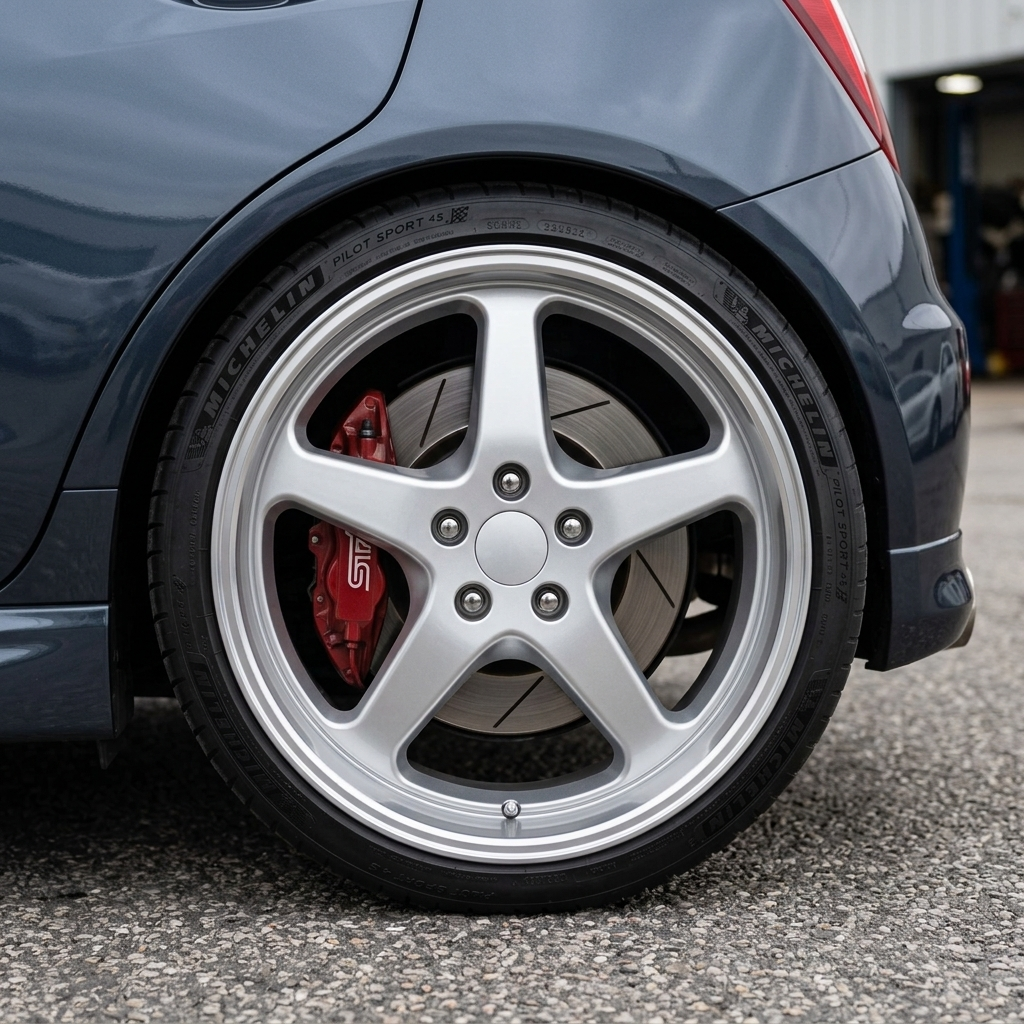
Tyre Pairing Guide for WRX and STI Wheels
Choosing the right tyre is as important as the wheel itself. The WRX and STI’s symmetrical AWD system requires all four tyres to be the same diameter – running mismatched sizes can damage the centre differential over time. Subaru Australia’s owner’s manual specifies the circumference difference between all four tyres should not exceed 5 mm.
Street Tyres (255/35R18)
- Michelin Pilot Sport 5: Excellent wet grip and tread life for Australian conditions
- Continental ExtremeContact Sport 02: Firmer sidewall with good steering feedback
- Bridgestone Potenza Sport: Strong dry grip with reasonable wet performance
Track Tyres (265/35R18)
- Michelin Pilot Sport Cup 2: Semi-slick for maximum dry grip
- Yokohama Advan A052: Exceptional warm-condition grip; popular in Australian time attack
Our aftermarket wheel buying guide covers tyre pairing principles and load ratings in detail.
Common Fitment Mistakes to Avoid
Even experienced enthusiasts make fitment errors on the WRX and STI platform. Here are the most common pitfalls.
Ignoring centre bore size. The 56.1 mm centre bore is smaller than the 73.1 mm found on many multi-fit wheels. Without hub-centric rings (73.1 to 56.1 mm), the wheel centres on the studs rather than the hub, causing vibration at speed and accelerated stud wear.
Too-low offset without suspension changes. Dropping from the factory +55 to +35 without adjusting ride height or rolling guards causes rubbing under compression. Our ensuring wheel fitment guide walks through measuring clearances before you buy.
Choosing style over weight. A heavy 18×9.5 wheel (12+ kg) negates the WRX’s handling advantage. Prioritise lightweight construction, especially for track use.
Mismatched tyre diameters on AWD. Running different tread depths front to rear stresses the AWD system. Always replace tyres in full sets of four.
Australian Compliance and Road-Legal Modifications
In Australia, aftermarket wheel modifications are governed by state and territory vehicle standards departments under the national Vehicle Standards Bulletin 14 (VSB 14) framework.
- Maximum track increase: VSB 14 allows up to 25 mm per side from factory track width without engineering certification
- Tyre protrusion: Tyres must not extend beyond the wheel arch when viewed from above
- Load and speed ratings: Replacement wheels must meet or exceed OEM ratings
- Guard coverage: The wheel and tyre combination must be fully covered by the vehicle’s guards
The Australian Department of Infrastructure, Transport, Regional Development and Communications publishes VSB 14 guidelines detailing allowable modifications. State-specific requirements from bodies like Queensland’s Department of Transport and Main Roads may supplement the national standard – always check your local rules.
Frequently Asked Questions
What bolt pattern does the Subaru WRX and STI use?
All WRX and STI models from 2001 onward use a 5×114.3 mm bolt pattern with a 56.1 mm centre bore. The earlier GC/GF WRX (1994-2000) used 5×100. Always confirm your specific model before purchasing.
What is the best wheel size for a WRX STI?
18×9.5 with a +38 to +45 offset is the most popular and well-proven size. This fits 255/35R18 or 265/35R18 tyres and fills the arches without guard modifications on most setups.
Do I need hub-centric rings for aftermarket wheels on a WRX?
Yes. The 56.1 mm centre bore is smaller than most multi-fit aftermarket wheels (typically 73.1 mm). Hub-centric rings are essential for eliminating vibration and ensuring the wheel centres on the hub rather than the studs.
Are aftermarket wheels legal in Australia?
Yes, provided they meet Vehicle Standards Bulletin 14 (VSB 14) requirements: OEM-equivalent load and speed ratings, tyre within the arch, and track width increase no more than 25 mm per side without engineering certification.
Can I run staggered wheels on a WRX STI?
Not recommended. The symmetrical AWD system requires equal rolling circumference on all four tyres. Mismatched sizes stress the centre differential. For staggered setups on other platforms, see our GR86 and BRZ fitment guide.
What’s the difference between cast and forged wheels?
Cast wheels are affordable but heavier (10-12 kg for 18×9.5). Forged wheels are machined from compressed aluminium billet, producing a lighter (7.5-8.5 kg) and stronger wheel ideal for track use. Flow forged sits between them in weight and cost.
References and Sources
- Australian Government Department of Infrastructure, Transport, Regional Development and Communications — Vehicle Standards Bulletin 14 (VSB 14)
- Queensland Government Department of Transport and Main Roads — Vehicle Modifications: Wheels and Tyres
- Japan Aluminium Association — Standards for Automotive Aluminium Wheel Manufacturing
- Subaru Australia — Owner’s Manual and Technical Specifications

